Big Changes Ahead

Hi guys! I have to try to show and tell you lots of stuff while being really quick cause I have to go move my workshop. YES! I am moving. From the 3rd floor to the 4th floor. LOL

Why?

My previous space was too expensive for me. Almost 600 euros a month. That, coupled with the cost of materials to make my shinies (silicone is ridiculously expensive, I’m not even kidding), and my vacuum pump dying and needing replacement (I’m degassing things in a couple stages as it limps along with its last gasps of life) I could not afford to stay there.

So: we’re going from 37 square meters down to 15 square meters. This is okay because I had way too much space to begin with. But … the new room also doesn’t have access to water. So I have to schlep a water reservoir from the bathroom to my workroom when I run out. Booo. Well, I guess I’m about to become very strong? Yay.

My wife helped me move all the things that needed two people to move yesterday (Sunday). Bless her heart for sacrificing a day off lifting and lugging with me.

Now, on to the stuff I’ve been working on! Quick quick GO!

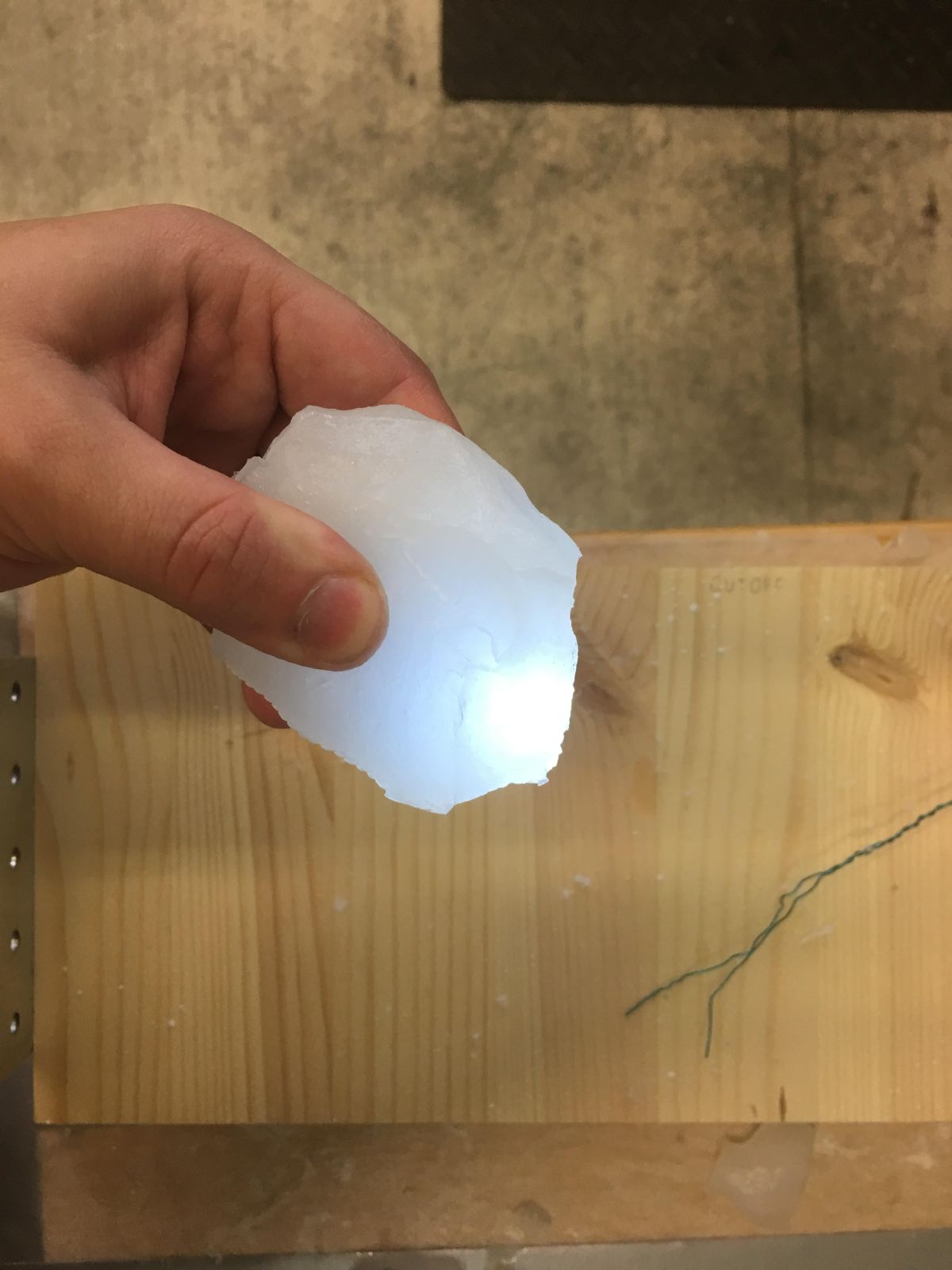
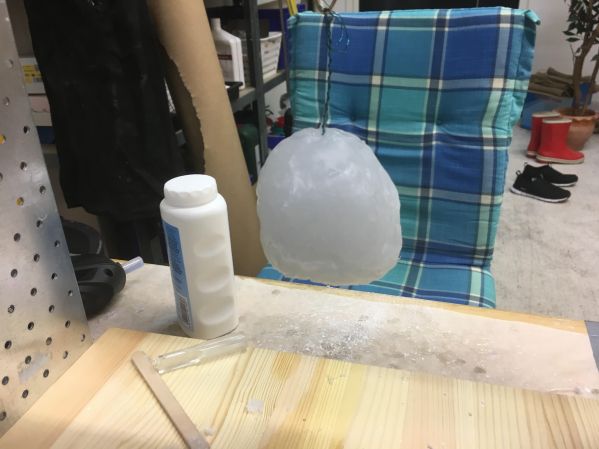
I made a witchlight! Yay!

unnamed

It didn’t work! Boo.

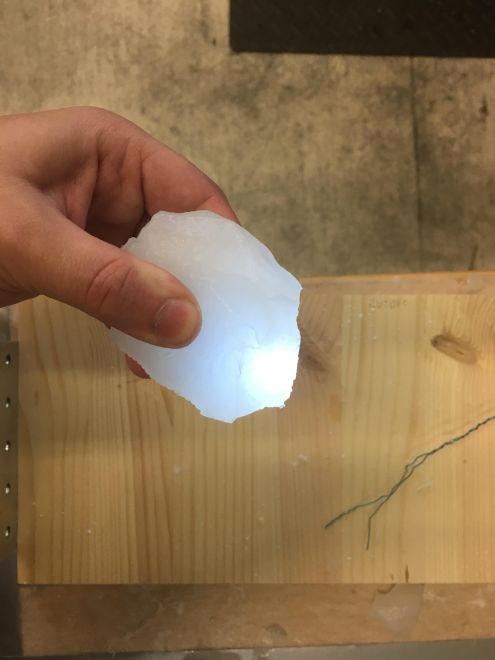
I shaved it down.

unnamed (1)

It … kinda works! Yay? Not good enough. I’ll keep trying!

Next thing GO!

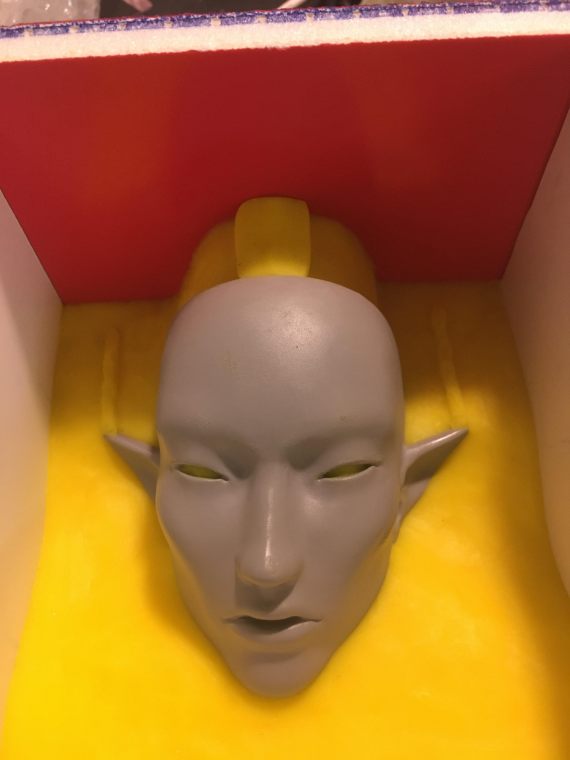
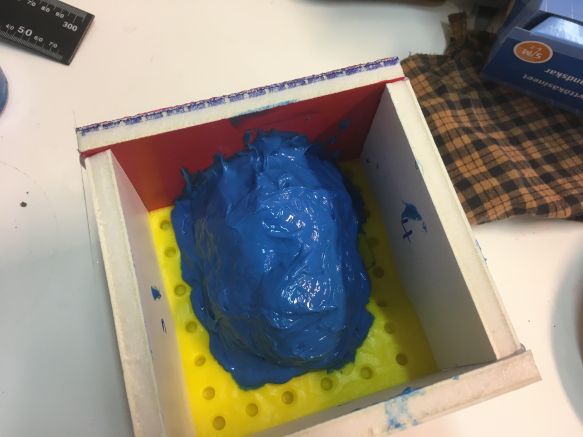
Doll head made by Lost Chronicles prepped for moulding!

unnamed (2)

Covered in blue goo!

unnamed
Mmmphhhrrmmph!

How did the moulding go? Don’t know! Not finished yet. Not touching it until it’s safely settled in the new workshop!

Next thing GO!

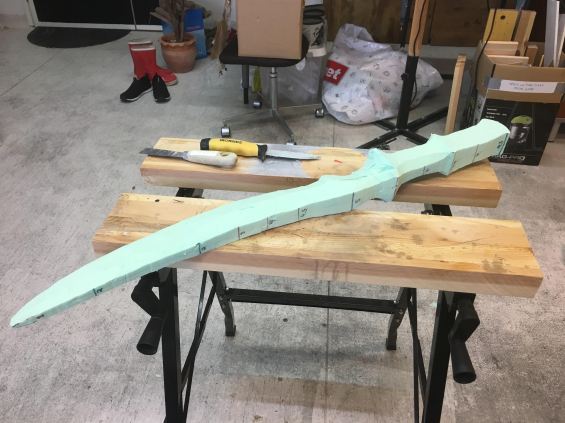
More carving done on Sariel!

unnamed (1)

Yes! In about a month you will be able to get your hands on a glorious longsword like the one that Isabelle Lightwood wielded in The Mortal Instruments movie! Woo! Send thoughts n’ prayers that everything goes smoothly.

Okaygottarun wishmeluck! Aaaaaah bye!

Wait! I forgot.

Don’t forget I have a Clariel for sale on my Etsy! It could be yours! Grab it!

Okay now bye for real gotta move stuff!

Blue Goo; What Do?

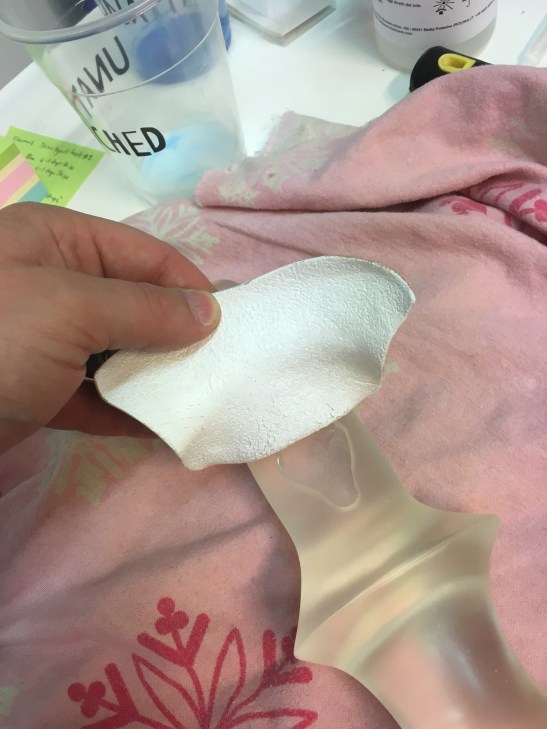
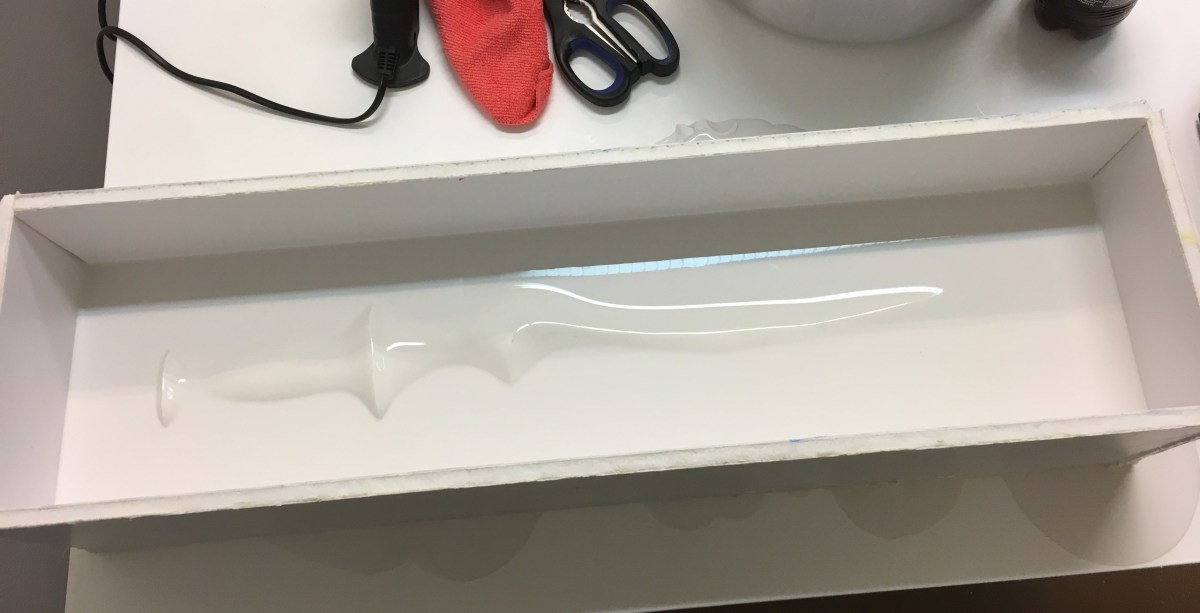
Hey guys! I’ve got a lot of new stuff coming up that I’m really excited to share! First, I’m pleased to announce that the third resin-cast Clariel has been purchased by a lucky Shadowhunter in Germany. I’ve already got the flap moulded, underside painted a nice reflective white, and adhered to the hilt. If all goes well, I’ll have it finished and on its way by the end of the week. Yay!

IMG_2713

Secondly, I’ve been doing some weird silicone experiments in an effort to make my moulds with less silicone. That would cut down on my expenses and allow me make things for everybody at a lower cost. Yay! I really am trying, guys. I know cost is a factor for most of us.

If I had a big ol’ factory with assembly lines and million dollar injection moulding systems, I could be making stuff in bulk and charging less but … nope. It’s just me. Me and my own two hands doing the best I can.

IMG_2702
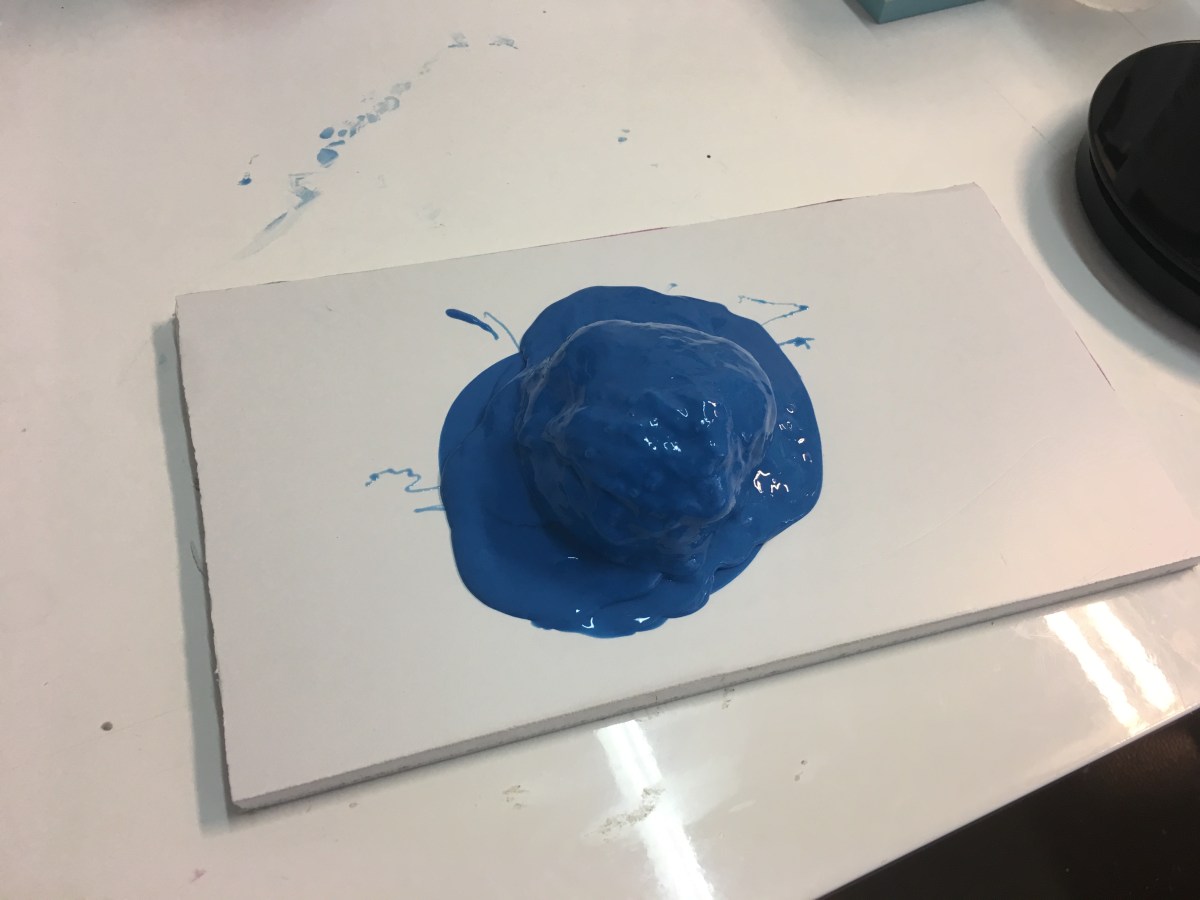
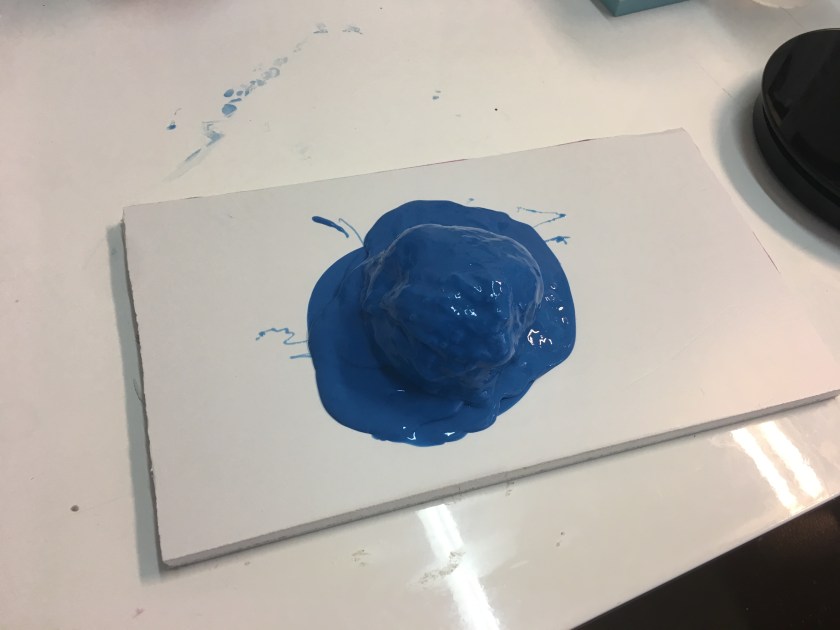
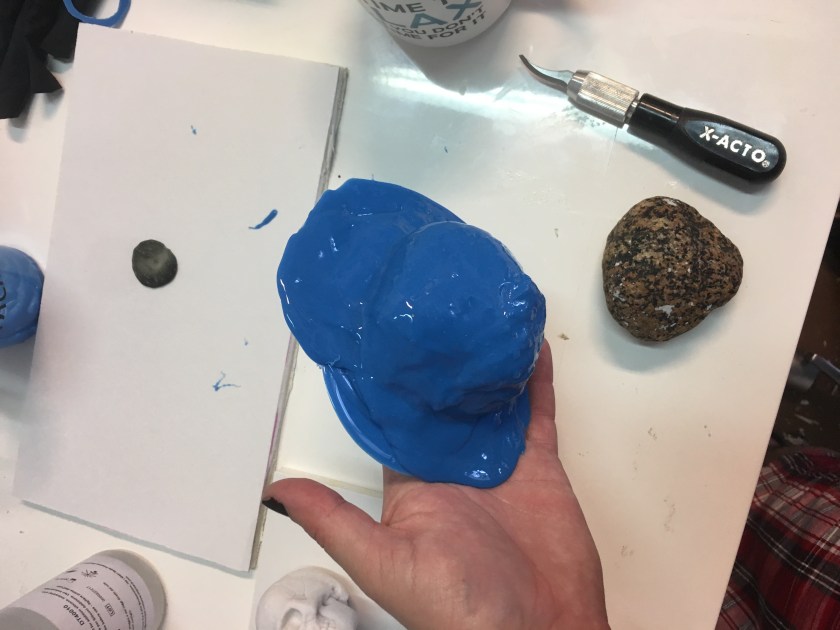
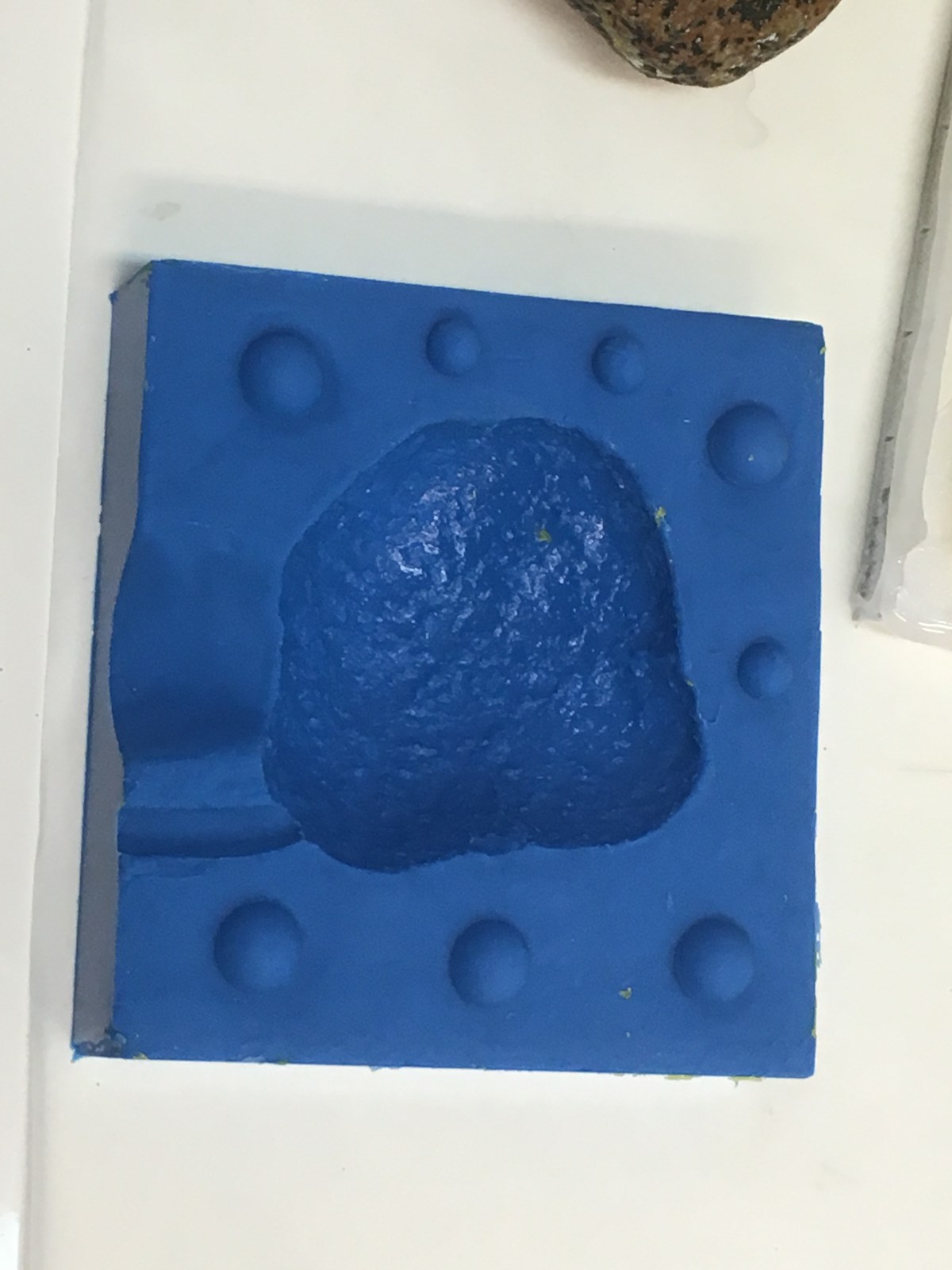
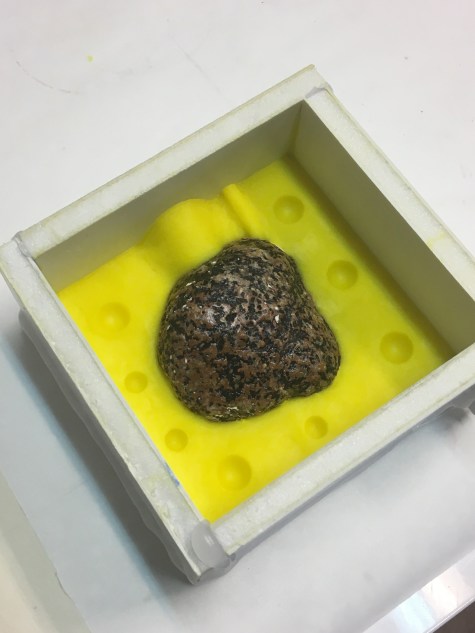
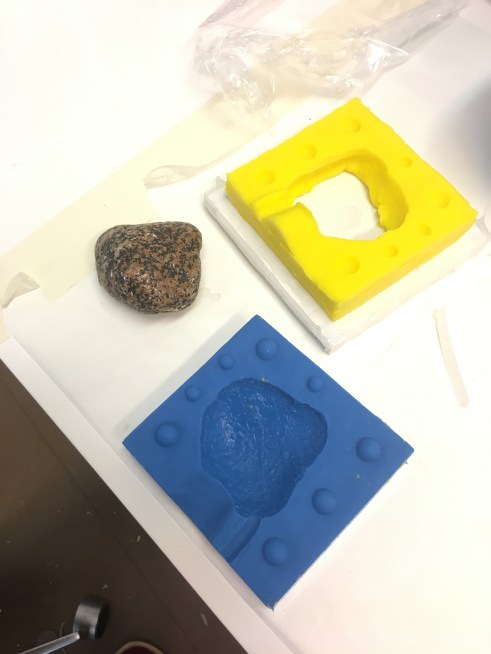
So what’s this stuff? Same silicone, just thickened and painted on.
IMG_2703
The thickener didn’t work so great so a lot of it oozed across the table.
IMG_2704
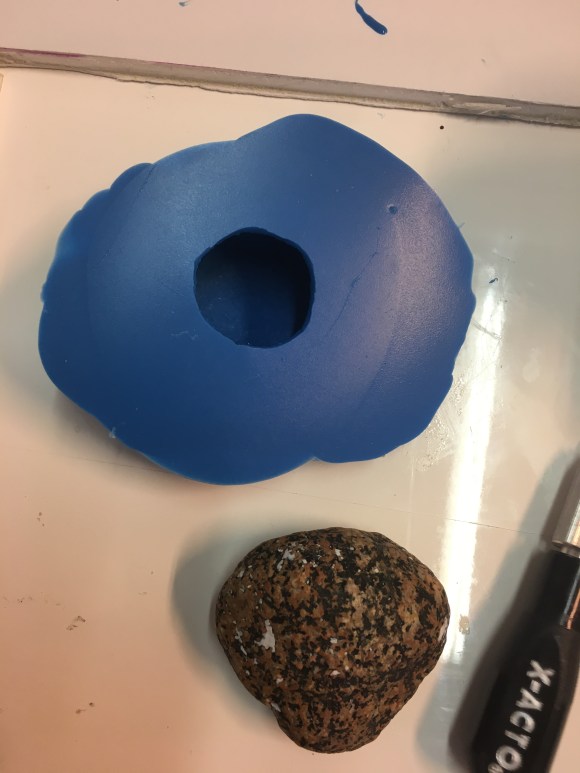
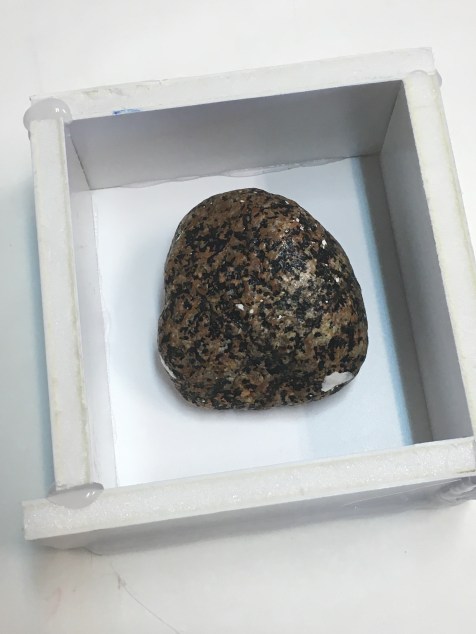
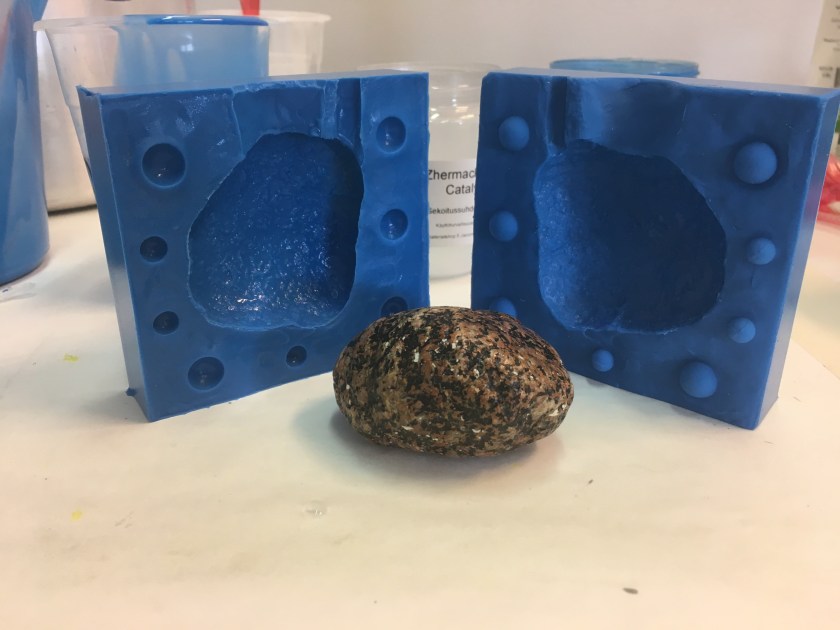
Still, I got a decent mould of the rock I was using with a lot less material.

Clearly, more experimentation is needed. The mould ends up quite a bit thinner and it might be more flexible than I want it to be, but that’s okay! I remain stubborn and I will find a way to do this just the way I want it. 🙂

Lastly, I have a strange experiment in the works. I want to try a new way of creating a support structure for silicone moulds. Usually, moulds are clamped between two boards or a ‘jacket’ is created around it with either fibre-reinforced plaster (like a cast on a broken leg), or fibreglass.

I’ve experienced some problems casting smaller objects in resin when the mould jacket is made of plaster. Since plaster is made of gypsum, and gypsum has a verrrrry low thermal conductivity it takes a really long time to heat up or cool down and usually feels cold to the touch. My resin needs a certain amount of warmth to set properly, otherwise I get uneven curing.

IMG_2229[1]
Like this. 😦
I would happily make my mould jackets out of fibreglass, but I don’t want to work with glass fibres. They’re nasty things. Irritate the lungs, irritate your skin, and just generally get everywhere and make a nuisance of themselves.

I could use burlap or similar cloth instead of glass fibre and I actually tried to do that last week. However, the epoxy or resin you typically use for this kind of thing is the most foul-smelling chemical I have ever worked with. Most of them require you to work outside with a respirator on. It’s that bad. So, I would either need to use a resin that is less stinky (and way more expensive!) or …

IMG_2711
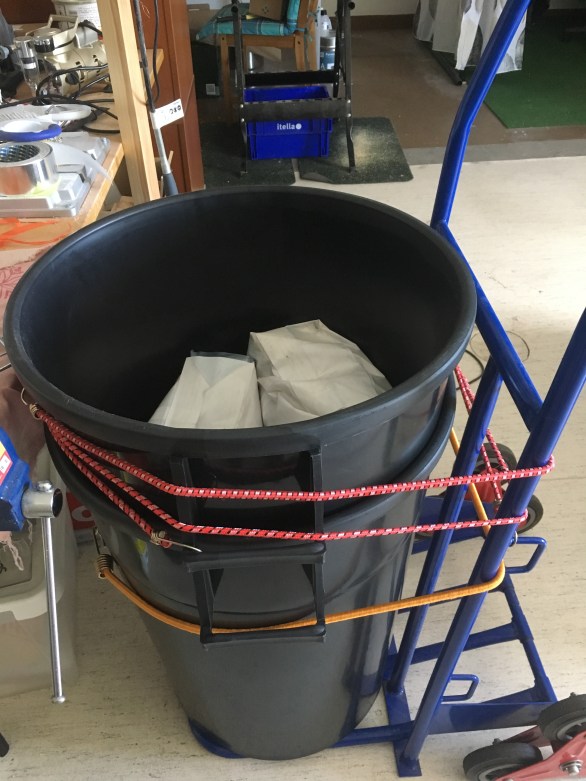
Is that … is that a garbage can? Ethan, you’ve lost your mind this time.

Yes, that’s a couple of enormous trash cans with bags of fine sand inside. Sand? Trash cans? What kind of crazy plan is this?!

You’ll have to find out later. I’m off to the workshop to finish a sword! Wheeeee!

The Mothermould!

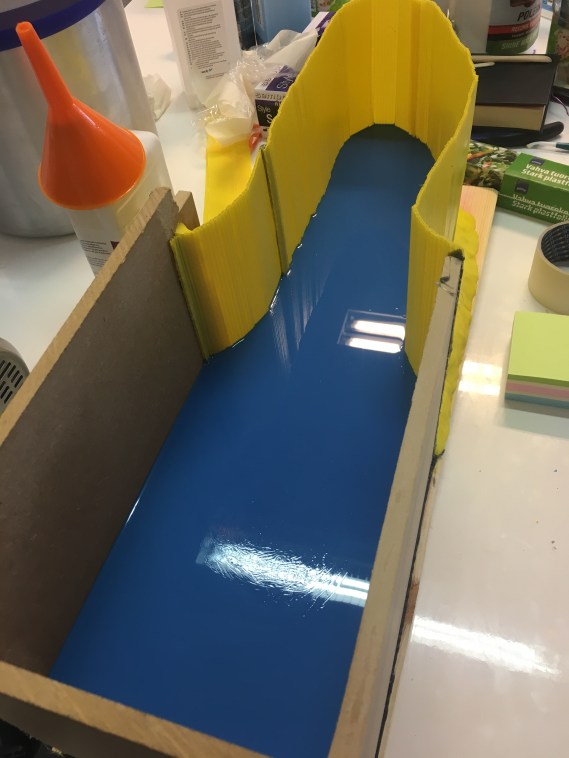
Woohoo! This has been a crazy exciting week. I stubbornly went back for another try at the mother mould for Clariel. I was terrified that I’d fail once again and have wasted over 100 euros on silicone.

IMG_2666
Well … it’s smooth, but is it cured?

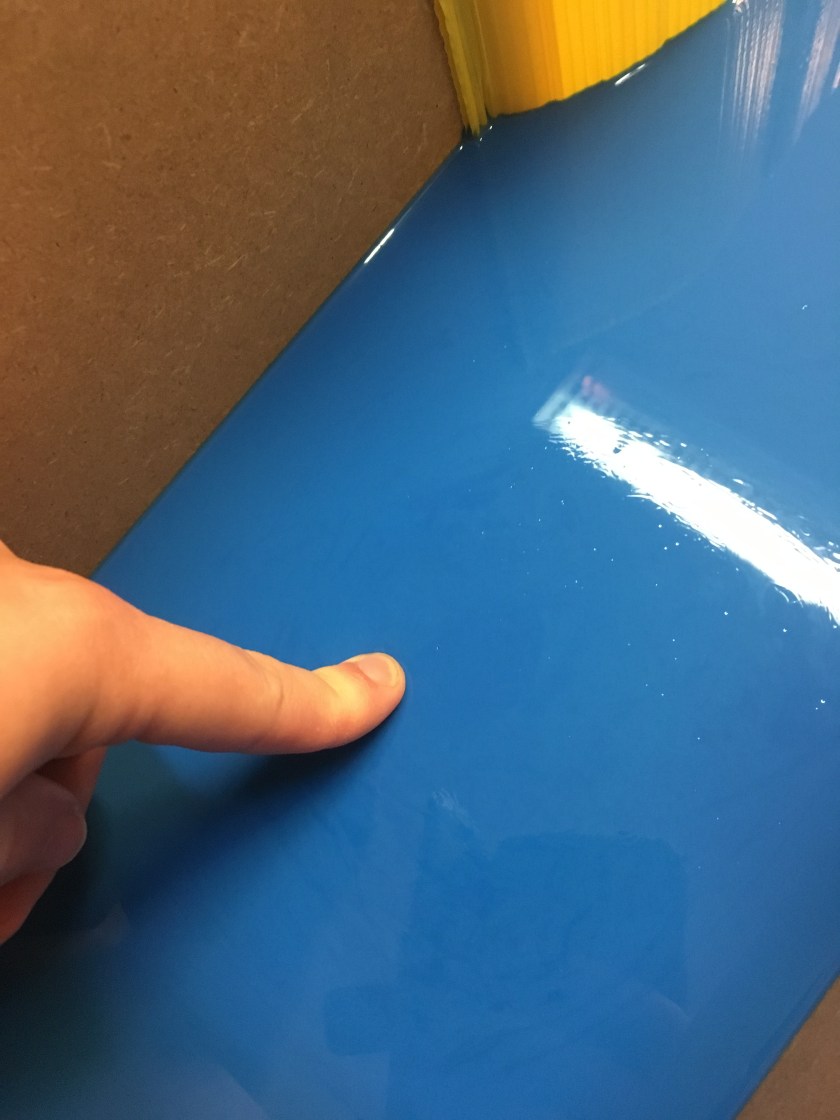
I was especially nervous because one spot was a bit of a different colour and firmness than the rest.

IMG_2668
Poke poke. Hello? 

But it wasn’t sticky and my finger didn’t sink into it soooo, let’s get it out of the moulding box.

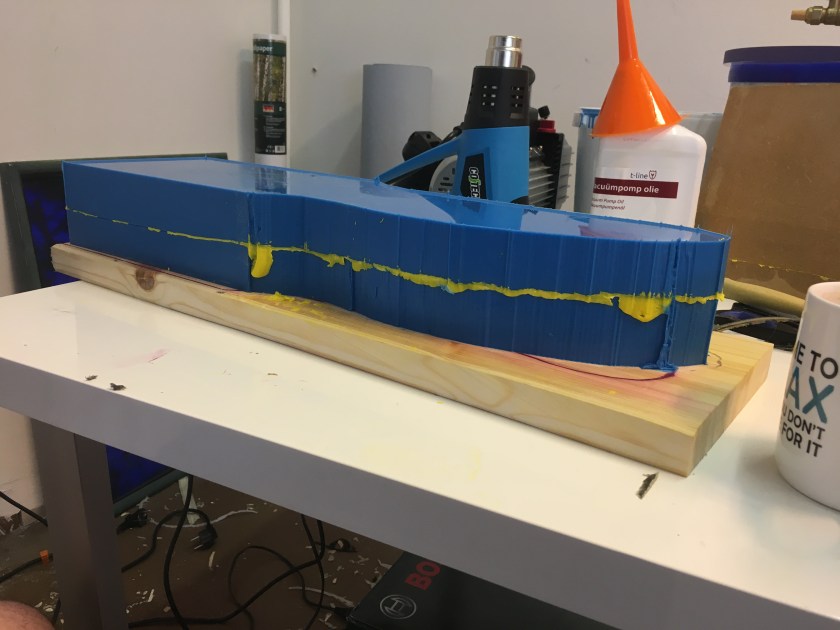
IMG_2673
A fine looking silicone sandwich!

Well it looked like it was all okay. But I would only be able to know for sure by separating the two halves. This was the moment of greatest tension. The moment of truth! Would it be sticky inside? Would it have somehow cured to the other half, trapping the model sword inside?! I didn’t know. I’d have to open it and find out.

IMG_2675
Here goes nothing …
IMG_2676
SUCCESS!

It cured! It cured all the way through and didn’t do anything crazy! I can’t tell you the relief I felt. That was so much work to get it right and my mistakes were not cheap but it all paid off.

IMG_2688
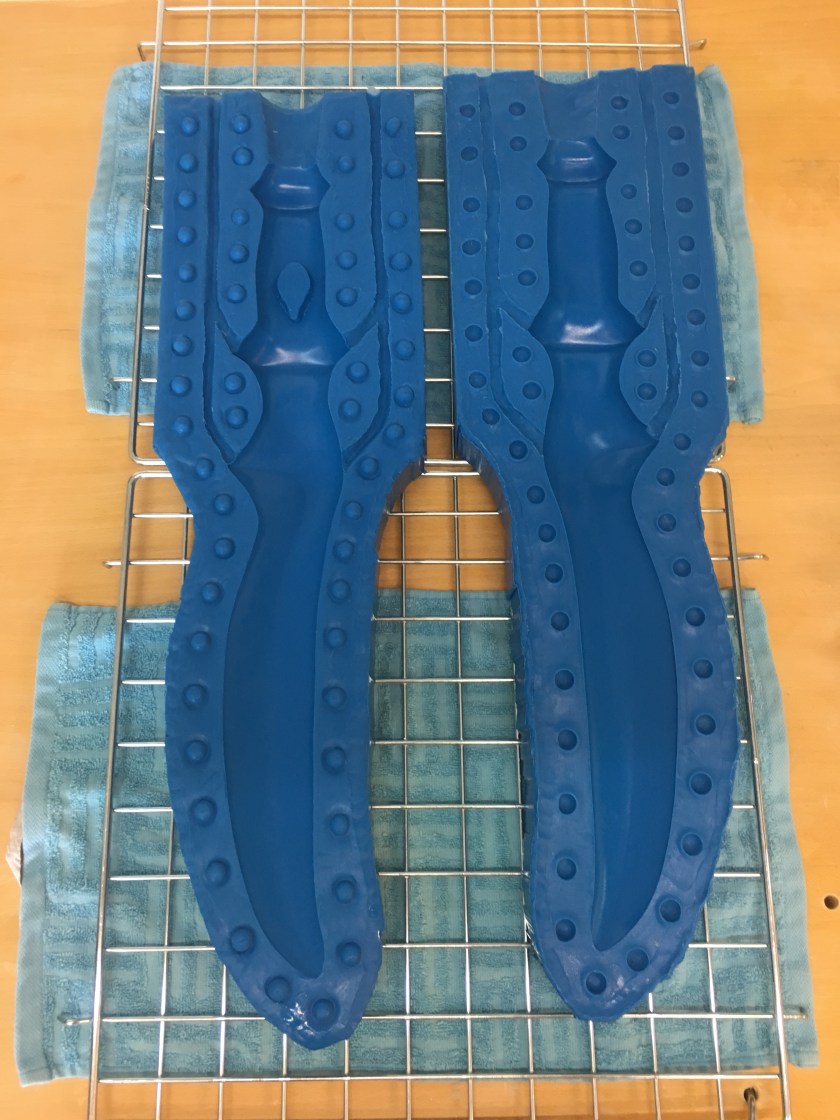
All cleaned up and ready for a mould jacket!

Ahh, there it is. That’s exactly what I wanted. I really needed that win. it fits together just perfectly. No weird gaps. No bubbles. No cracks. Hurrah!

Now on to the mould jacket! This mould is too wobbly to support itself indepedently so it needs a “cast” around it to keep it from popping open or deforming when I pour the resin in. Imagine it like a body; right now, it needs bones so it can stand up. 🙂

I tried some really gross-smelling plastic stuff.

IMG_2692
Uhhh …

And it hardened before I was done working with it! well that’s useless.

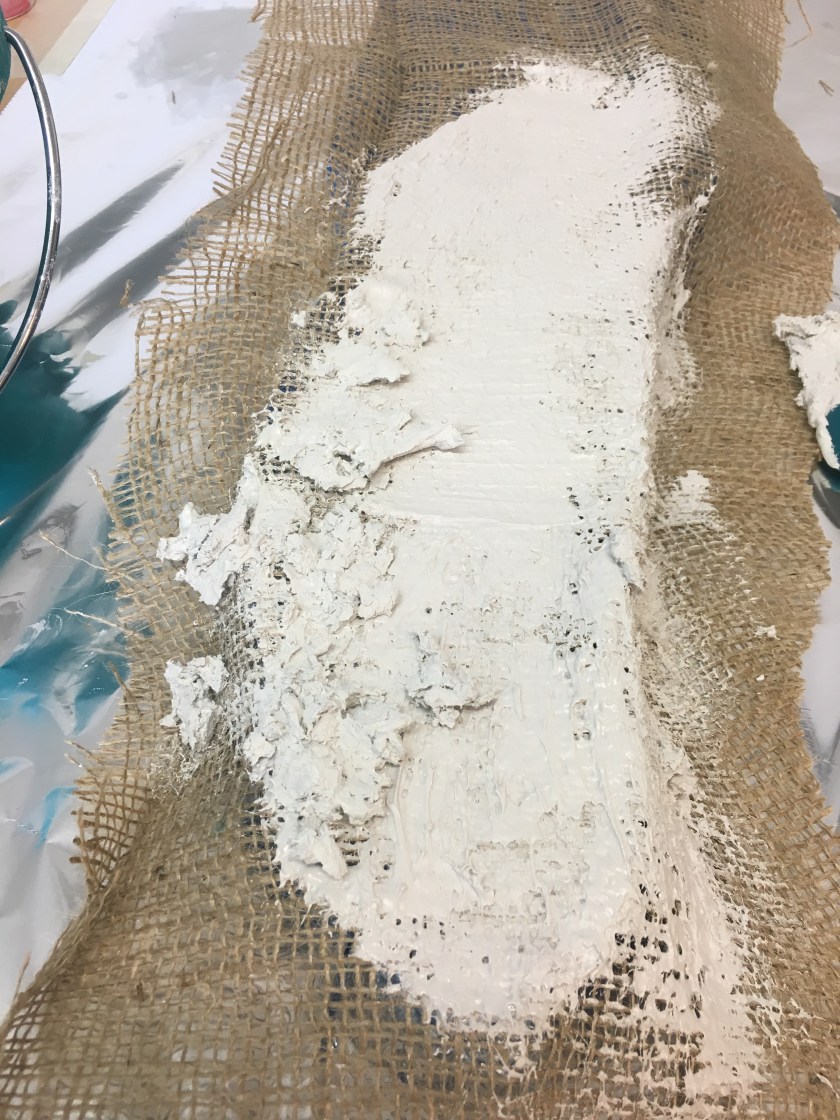
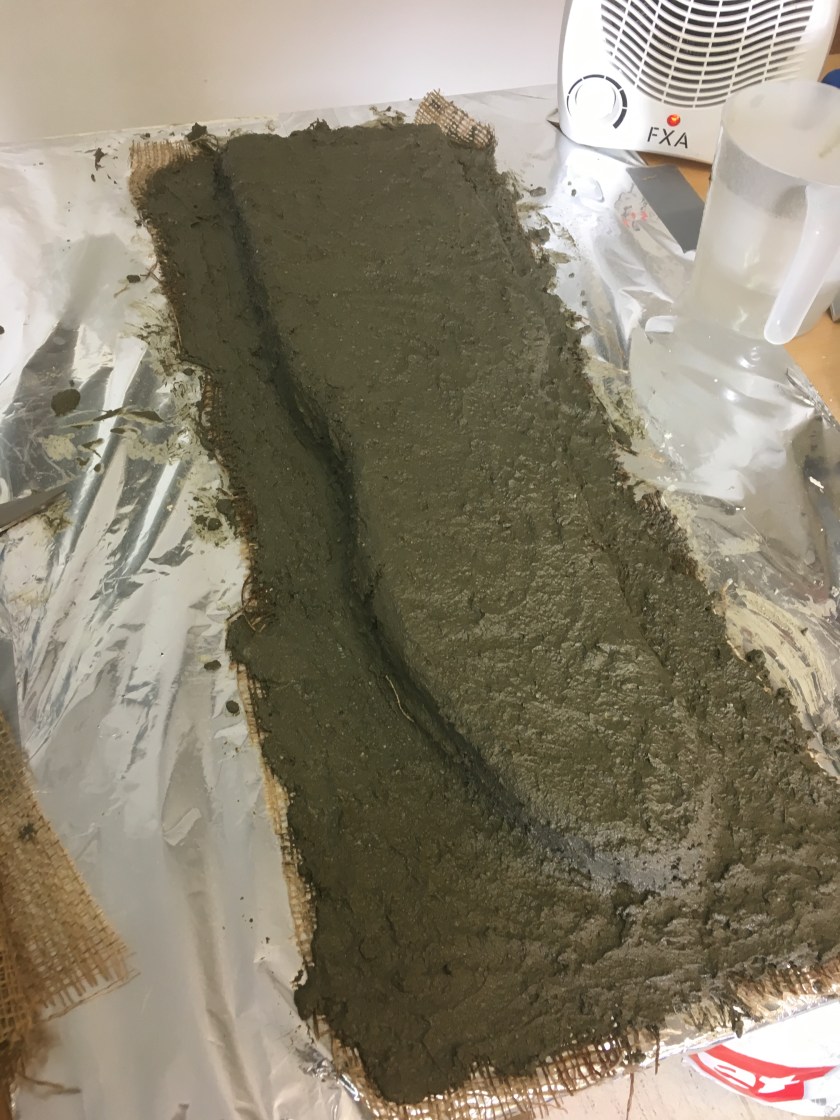
So I gave my dear mould a nice, relaxing mud-mask.

IMG_2695
I thought it looked stressed out. This’ll help.

Really, though, that’s hobby concrete smooshed into layers of burlap cloth. I’m hoping it will be strong enough when dry to not crack or crumble. We’ll have to see! This is how I left it last Friday night so this morning I will check on it and see how my experiment went. Don’t worry! I’m not out of ideas yet!

I have determination! I have sisu! And if that doesn’t work, I have coffee.

Round Two: FIGHT!

I know, I know, I haven’t got any new pictures for you today. Bad Ethan! 😦 I was so busy getting the mould box reconstructed that I forgot to take a photo of it! I’ll make it up to you and take lots of photos of the process today. Forgive me?

I got my order of silicone in at the end of last week and I am ready to have a rematch with the half of the sword mould that cured too fast! Everybody cross your fingers, toes, and eyeballs for me and hopefully we’ll have a brand new mould ready to rock by tomorrow.

Are you excited? I’m terrified! Let’s go! ADVENTURE! 😀

I hate bubbles.

No really. They’re all well and good when you’re blowing them into the air on a sunny summer day, but when they’re in your mould? Sucktastic.

IMG_2642

This will not produce a lovely smooth sword. This will produce a mostly lovely smooth sword with weird little warts all over it. Unacceptable.

IMG_2643

So why is it like this? What happened? Well, it turns out that my workshop was hotter last week than I thought it was. Zhermack’s beautiful ZA22 silicone’s normal working temperature is 24 degrees Celsius. That means that, at 24 degrees, this lovely blue goo will set in 60 minutes. If it’s colder than that, it will set more slowly giving you a longer working time. But if it’s hotter …

The setting time is dramatically faster! I was in the middle of degassing it when it started turning into a sticky glop the consistency of cookie dough. I knew I was in trouble. 3 litres of silicone is NOT cheap. I pulled it out of the vacuum chamber and poured it as fast as I could. It was sticking to the inside of the container and I had to shove my hand into it (gloved of course) to pull out the rest because it wouldn’t flow anymore. It was like working with a huge mass of chewing gum.

As you might guess, bubbles got trapped in the silicone because it was just too viscous (thick) for the air to escape.

What to do? That right there is about a 108 Euro mistake. Yikes. Well, the important bit is the mould that immediately touches the sword I’m going to be casting. That has to be perfect. The rest of it? Meh. Nobody’s going to see any of that. So I decided to cut out the middle section of the mould and re-pour it instead of re-pouring the entire thing.

I should have re-poured the entire thing.

IMG_2654

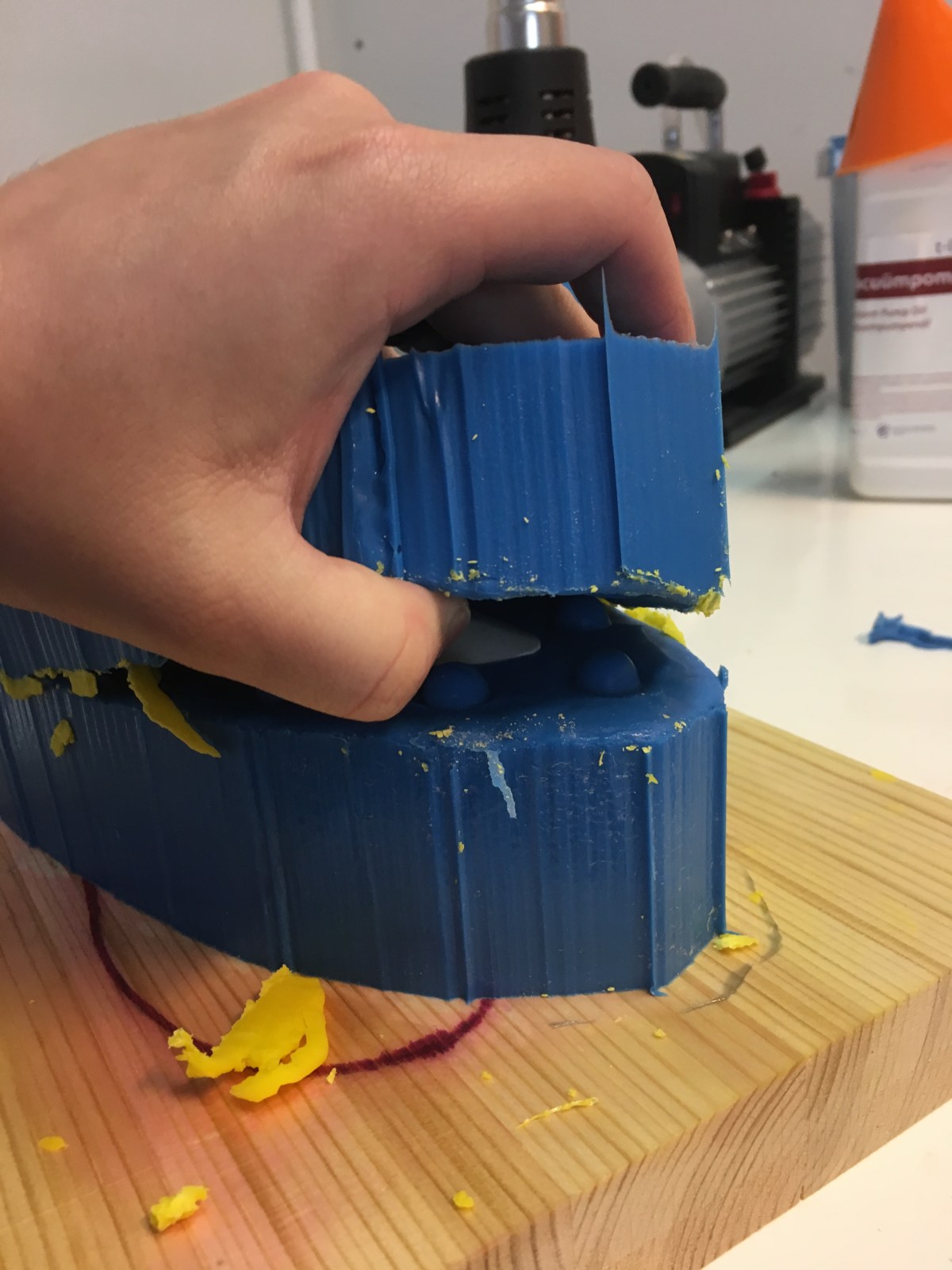
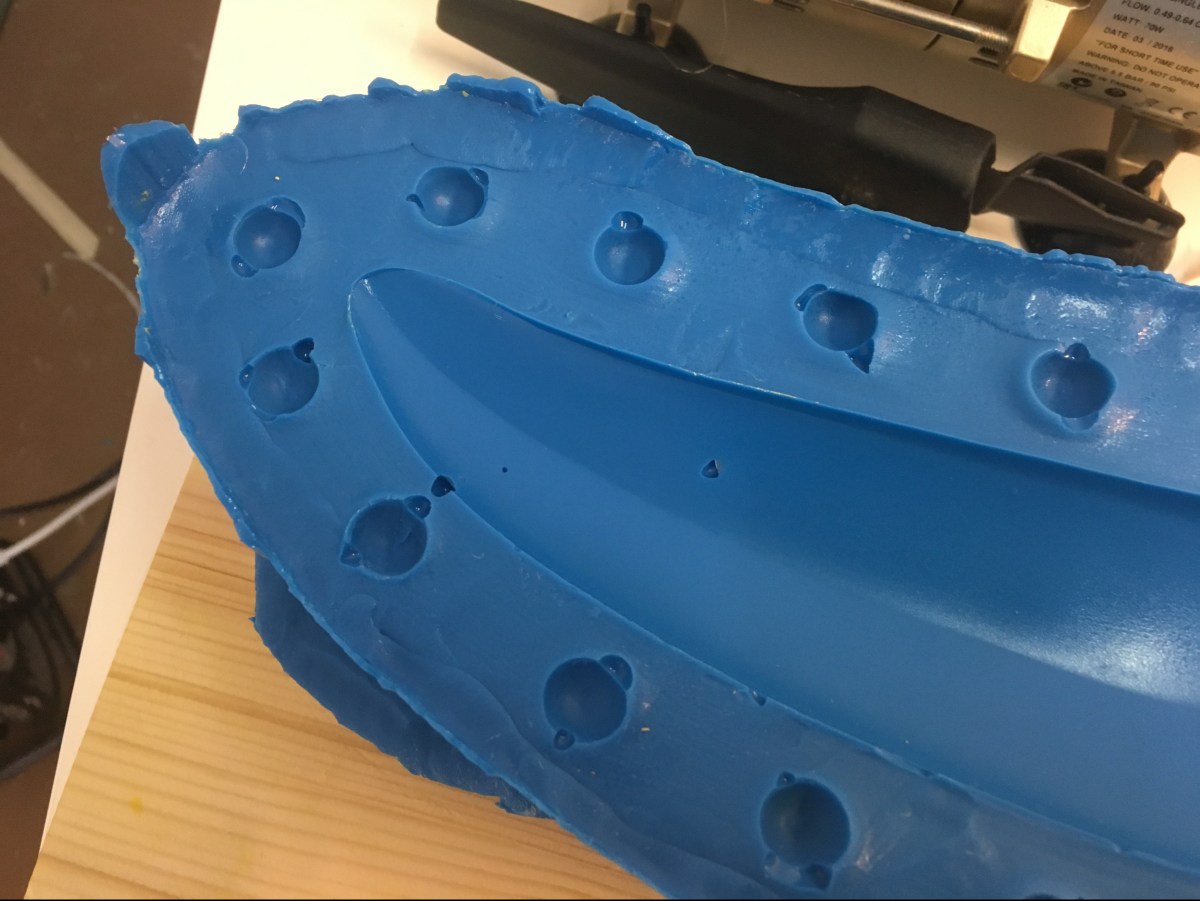
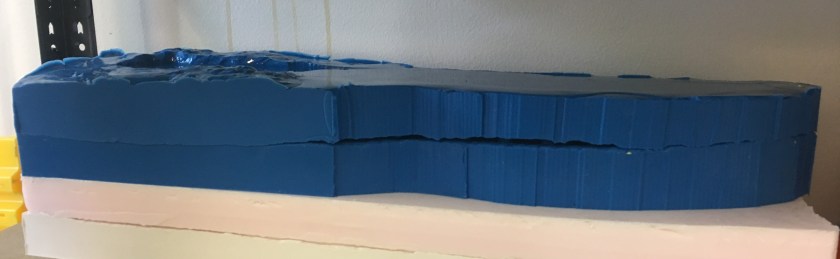
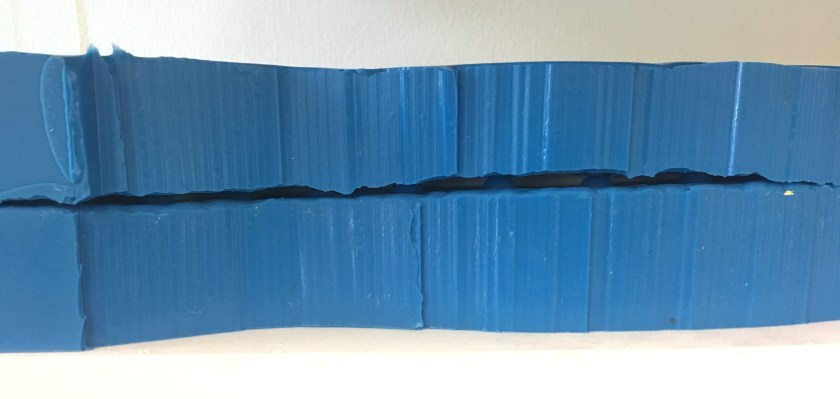
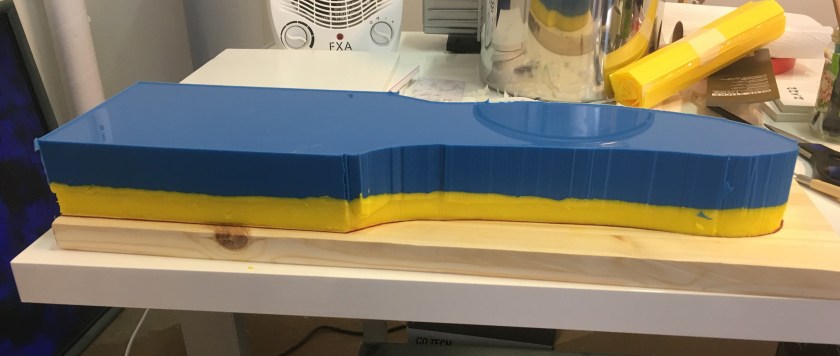
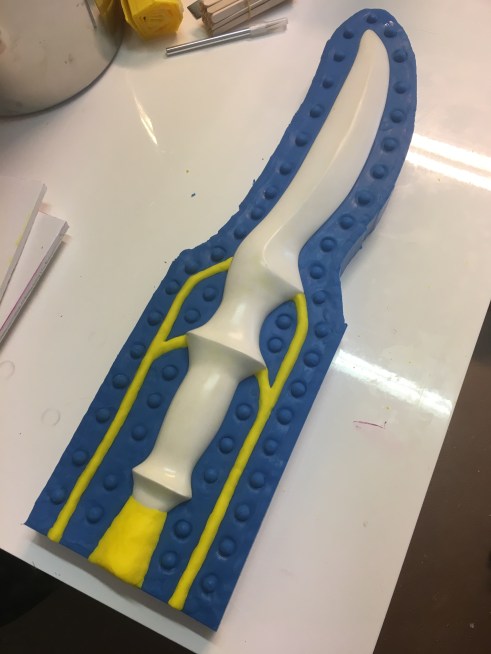
So what’s this crazy deformed blue crocodile thing? That’s the mould. You might notice a slight gap there in the side.

img_2653.jpg

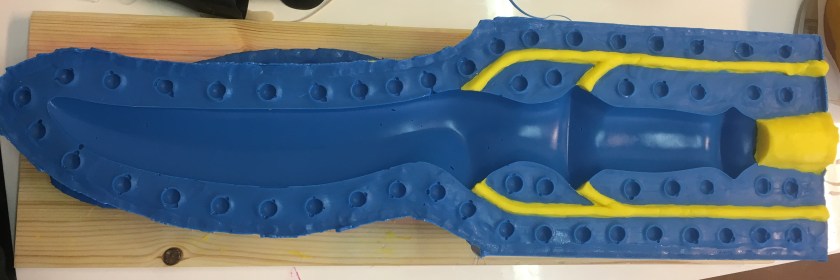
And by ‘slight gap’ I mean it’s wide enough to see the model sword inside the mould when it’s closed. So if I used the mould like this, all the resin would leak out the side. Why did it do this? Well, you might notice that the left side of the mould there has no gap. Let’s have a top-down view so you can better see what I’m about to explain.

IMG_2621

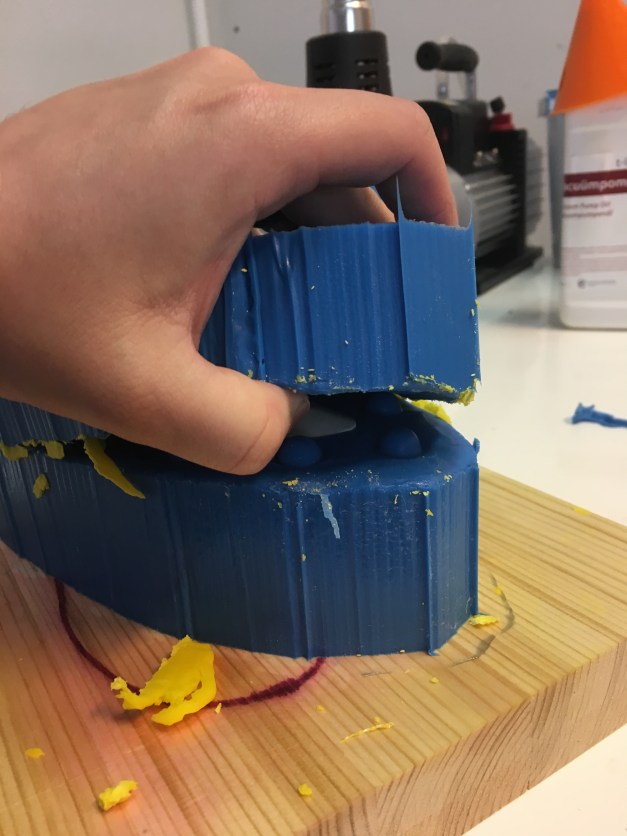
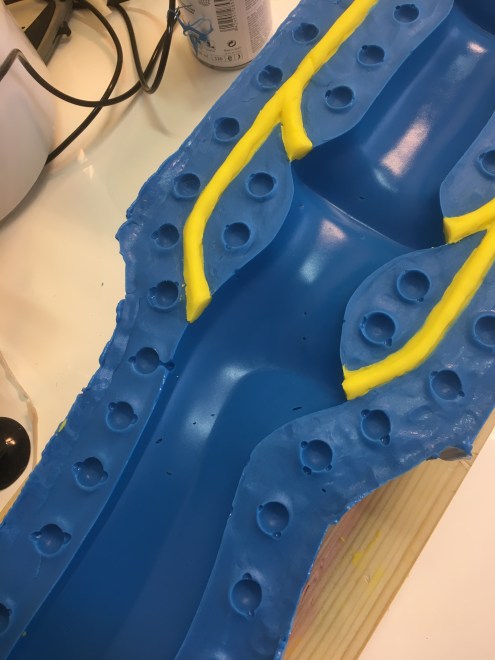
The top half of the mould is where hilt is and also where all those funky vents and the pour spout is. That makes it thicker than the funny banana-shaped bottom half where the blade is. Of course, the thicker bit is heavier. So when I poured the silicone into the middle section that I chopped out, the heavy top half stayed put, but the lighter bottom half floated! Since it only lifted up about a centimetre, I didn’t notice the movement.

The silicone I poured into the middle part to re-mould the sword bonded nicely with the rest of the silicone mould around it. Yay! But the silicone that crept in between the two halves of the mould didn’t stick to either side even though I cleaned one of them really, really well, and sealed the other very thoroughly. It would not obey my wishes and stayed a crazy blue flap just hanging out in between the two halves of the silicone sandwich.

So what do I do? Uhh … well I don’t have enough silicone left to re-pour the half of the mould I messed up. I’m not completely sure my budget can withstand another silicone purchase this month. We’ll have to see. So I’m going to attempt a weird “spacer” where the gap is so I can at least use the mould until I can re-pour the other side. What I’m going to make that out of is still up for debate. Possibly some kind of polymer plastic. Possibly rubber of some kind. Possibly uh … I don’t know. I’m going to experiment with many kinds of goo and see what works.

I have learned a lot from this mistake so it’s not entirely doom and gloom. So I’m trying to look on the bright side. It’s still frustrating for me cause I really wanted to be casting my first sword in the new mould this week. Oh well. The Iron Sisters are stubborn for a reason! Don’t give up!

Stay tuned for more exciting news including a brand new sword I just finished. I’ll give you a hint: it has nothing to do with Shadowhunters!

Silicone Sandwich

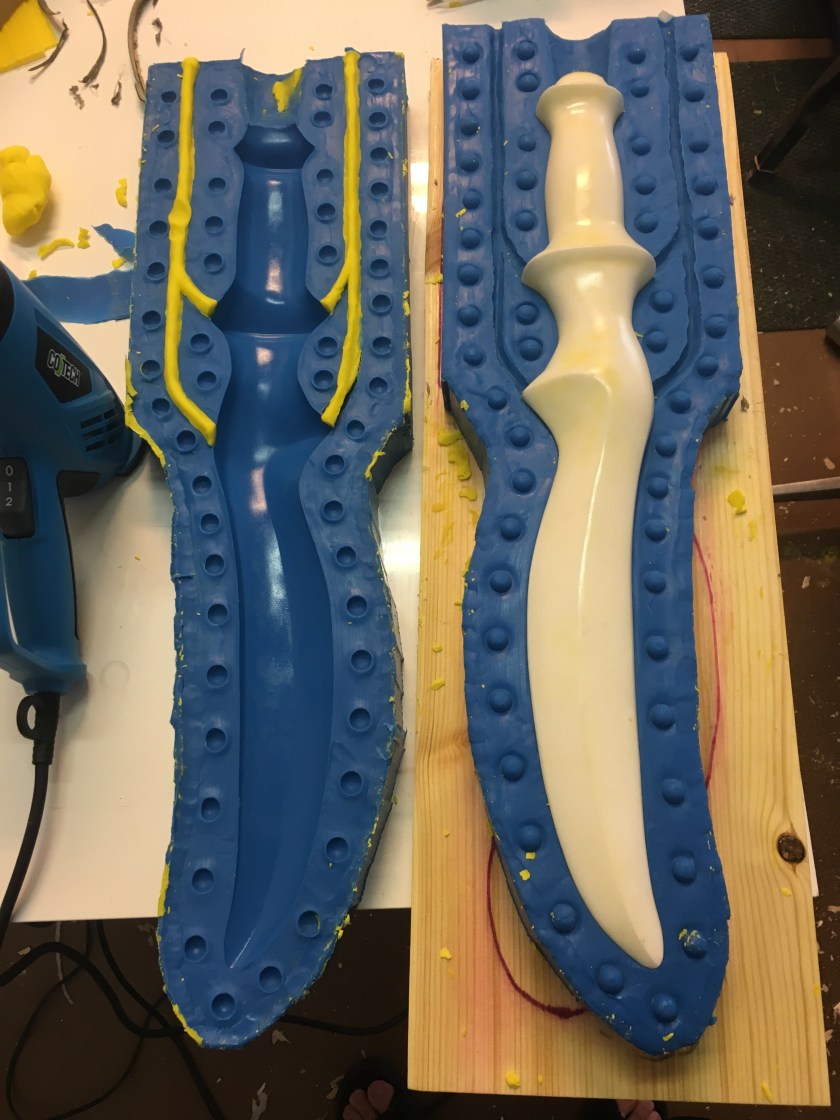
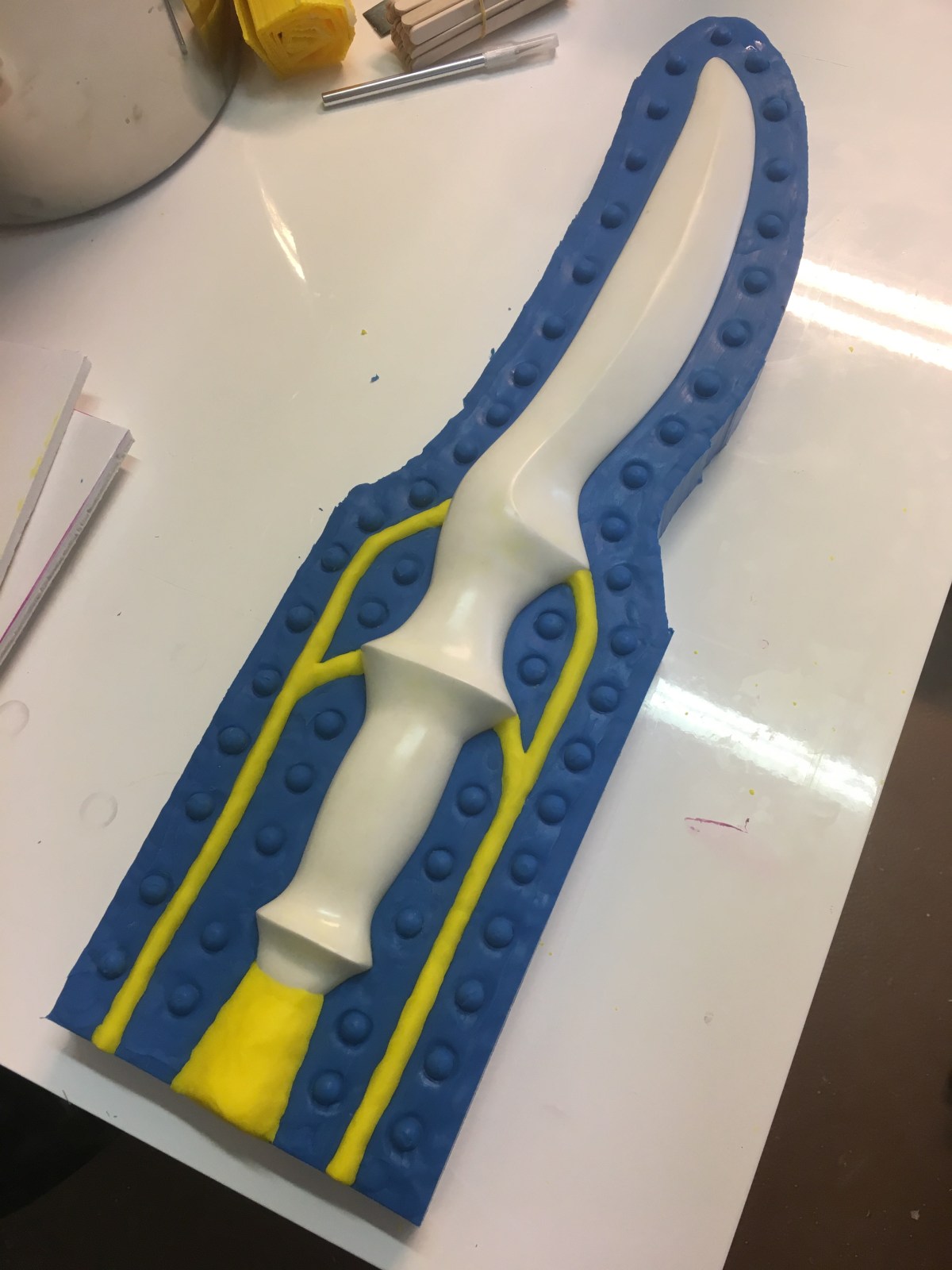
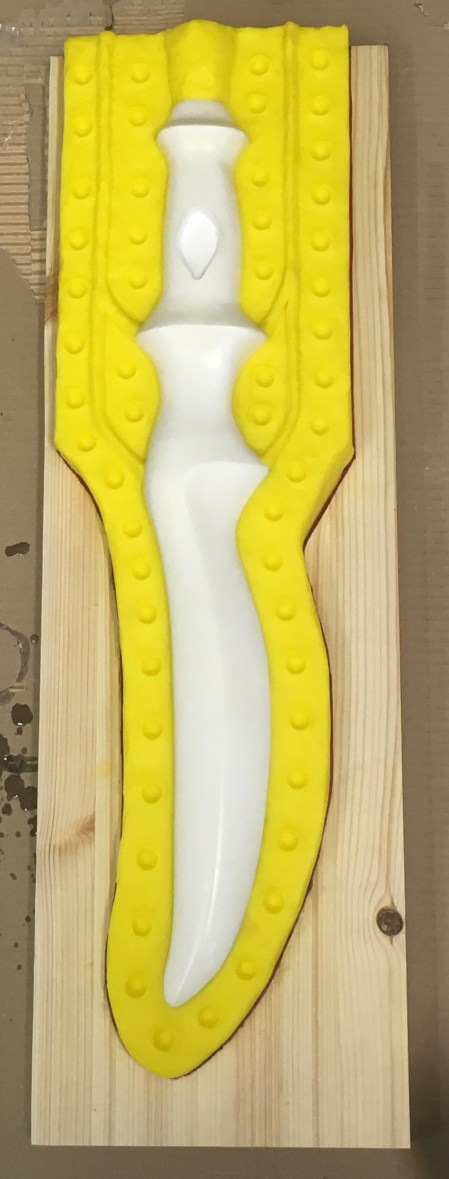
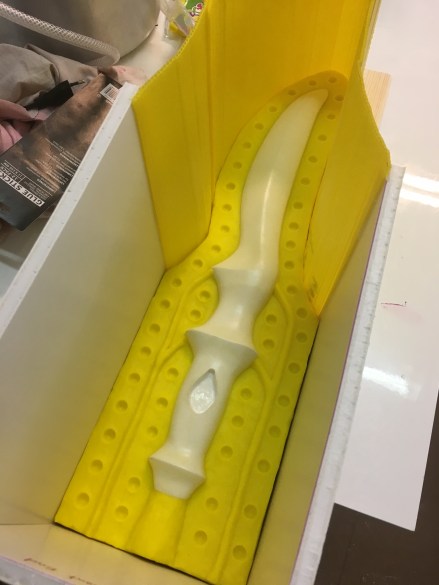
Otherwise known as the two-part mould. It’s half finished guys! Actually, it might be all finished right now; I have to go to the workshop to check. But I wanted to share with you the progress shots from last week because playing with goo is exciting!

IMG_2610
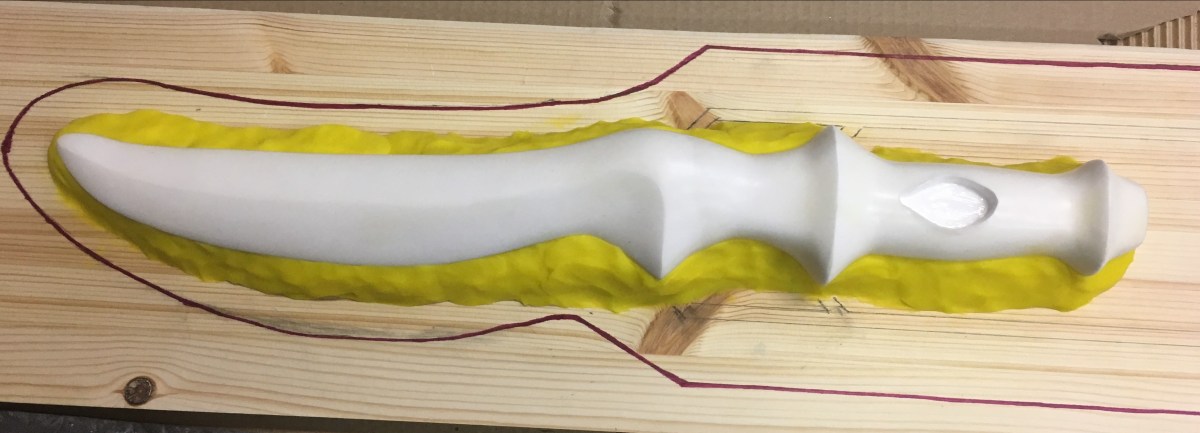
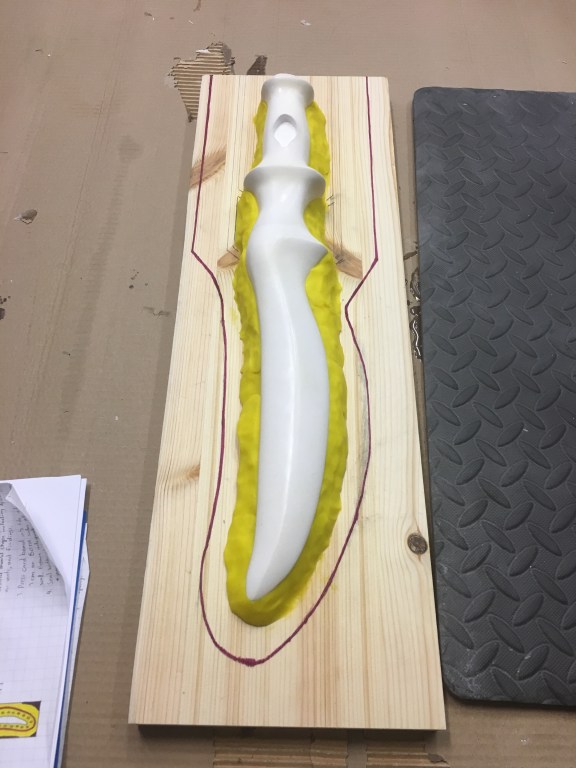
There’s the mould design sculpted in clay.
IMG_2613
And placed in its box for silicone pouring!
IMG_2621
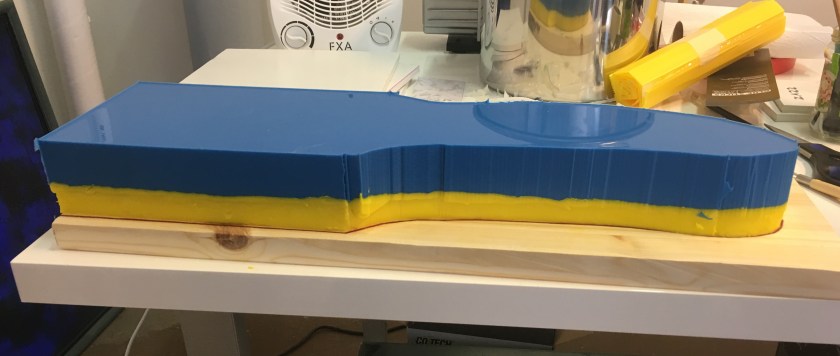
Some kind of strange Ikea cake …
IMG_2623
Now to clean of allllll that clay. It took hours.
IMG_2632
Then a quick re-sculpt of the spout and air vents.

And it was all ready to go back in the box for the second half! Then I hit a few snags. First, since it’s the other side, the bendy part around the blade had to be put on the other way and when I did that, it somehow ended up about one centimetre shorter. I have no idea how this happened. Oh well! I just added some more corrugated plastic on the end.

Then, I noticed that the straight pieces of foam board I had used for the upper parts of the sword had become badly warped overnight! I tried to patch the gaps with extra hot glue but it just wasn’t working. I had to cut some MDA board instead and use that. That sucked up some extra time.

Then, as I was degassing the silicone for the second pouring, I realised something: it was really hot in my workshop. I thought it couldn’t be more than 24C or so in there and I was really focused on my work, not my comfort. BUT, with this silicone you can accelerate the curing time by increasing the temperature. Handy right? Except when all the bubbles aren’t out of it yet and it’s starting to set! AHHHHH! By the time I noticed what was wrong it was already as thick as cookie dough. I had to stick my gloved hand INTO the bucket of silicone and pull it out glob by glob. It even started curing to my glove and I had a big hand-sized blob of blue slime dangling off my fingers as I desperately waggled it, trying to get it off. It eventually plopped into the mould box with the rest.

So … will it be okay? I don’t know! The top of it won’t be as smooth and glossy as the top of the “Ikea cake” picture there. I’m afraid the silicone had already thickened so much that the last blobs that fell in will probably stay as they are and make the surface bumpy and weird. What does that mean for me? Well, it just means that I’ll have to do a fibreglass jacket around the mould instead of a wooden clamping box. Oh well! I have the stuff to do either one and I was on the fence about which way I wanted to do it anyway.

The real question is: did it cure nicely against the SWORD? Because if there’s bubbles or spaces against the sword, I have to do this part of the mould again. I’m making a pretty new mother mould for every Clariel model sword that will come from my shop. If there’s a mistake in that mould, there will be a mistake in every sword it produces! And I’ll have to take time to fix each and every one. That would ruin the point of making a better mould in the first place! It’s gotta be just as perfect as I can possibly make it.

Wish me luck! I have a feeling I’m gonna need it today.

New Mother Mould

Hi everybody! Quick update to let you know what I’m up to. I’m setting up the moulding box to pour the first half of the new Clariel mould. Yay! It doesn’t look too jazzy right now but cool stuff is coming.

IMG_2591

Why the new mould? Well, after casting 4 swords from the first mould I made, I realised that each of them had a slight bend toward the right near the tip. This was easy enough to correct with a trip to Chewy (my belt sander), but I didn’t want to have to do that for every single sword. That makes a lot more work for me and takes too much time to produce each sword. I’m working on getting high quality swords made for you faster so that more people can have access to the pretty stuff. Anything that stands in the way of that goal is simply no good!

So I went back to the plaster model sword and shaped and measured it with more accurate tools. Then I carved a light slot into it so I don’t have to do that freehand with each sword I make. (That saves about an hour per sword.) Then I re-finished the whole thing with several layers of sealant and gloss and buffed it all up to 2000 grit. My aim? To get it as smooth as possible so I have the bare minimum of sanding and polishing to do to each sword that comes out of the mould.

Well, off I go to the workshop! Wish me luck.

New Silicone Test

Woo! I got some new platinum based moulding silicone from Materialshop.fi and oh my gosh it is the best stuff I have ever worked with. I wish I had started working with this from the very beginning. It would have saved me so much time and money!

I got a small test batch to see how it would work since I’ve only ever worked with tin based silicones before and I was nervous about messing it up. I decided to try casting a stone that has about the size, shape, and texture that I want for the much-requested witchlights. (I know you guys have been asking for them and I promise they’ll be available as soon as I get through all the design challenges!)

Enough jabbering. Let’s have some pictures!

IMG_2429
Step 1: Seal object to be moulded.
IMG_2432
Step 2: Cover object to be moulded in clay up to the halfway mark.
IMG_2443
Step 3: Pour in silicone. Wait. Take out finished mould.
IMG_2446
Step 4: Flip it over. Seal the completed half of the mould. Pour in more silicone. Wait. Take out your finished mould!

What’s next for this week? Well, I will be testing out this baby with some resin and fiddling with some light fixtures. (Have I mentioned how freaking hard it is to hide electronics inside a transparent object? AAAAHHHHH!) And I will also be finishing the closure on the Clariel sword I have almost ready to go. Then some very patient Shadowhunter will be getting an email they’ve been awaiting for a long time!

Thanks everybody for sticking with me and supporting me while I go through the hurdles of designing, improving, and crafting. I’m doing my best to make my art works available for everybody. It has forced me to make big changes, innovate, learn, and step so far out of my comfort zone I’m not sure where it is anymore. HA! But seeing the results makes it all worth the blood, sweat, and tears.

Wish me luck everybody! Off I go to make some more magic.


A Mould for Clariel

Yay! After harrowing adventures, I finally have a completed silicone mould for Clariel

IMG_2304[1]

Why is it two different colours? Well, I ran out of the pink silicone from Alumilite halfway through the moulding. It took a little bit more than I thought it would. Then the white silicone from FormX didn’t set the first time I used it because I accidentally mixed too little catalyst. (I thought it said 100:1 but it actually said 100:5.) Annnnd when I was cleaning the un-set silicone off the pink stuff that I did have on the other side, the turpentine shrank the pink silicone and caused parts of it to rip. So I had to re-cast the entire half mould all in the white stuff.

In addition to that, because my workshop is so cold (17 degrees C or 62.6 degrees F) I had to rig up a little hot house out of foam for the white silicone to cure. It’s much happier at 24 degrees C. I almost despaired and tossed it out because it hadn’t gotten totally solid overnight (Thursday night) and when I arrived on Friday, it was still very smushy. The thing about tin-curing silicone is: if it’s not cured by the end of its stated curing time, it’s not gonna. Unless …

Unless it’s too cold. If it’s too cold, it’s probably still curing just reaaaaaally slowly. So I crossed my fingers and warmed it up. In a few hours, it set! Woohoooo! I can’t tell you how happy and relieved I was.

So, today, I still have a bunch of cleaning to do from the failed curing (last Monday) and the retarded curing (last Thurs/Fri). Un-cured silicone is a nightmare to clean up cause it doesn’t react to very many chemicals. I use turpentine, and then concentrated dish-soap to clean up the residual oil. Or I use acetone or 100% isopropyl alcohol. It depends on how cured it ended up, what it’s stuck to, and how stubborn it’s being.

Once I have a nicely cleaned working area, I can tackle the actual casting in resin. I’m kinda terrified. I hope it’s not as challenging as the silicone!

Learning Experiences

Wow! This past week has been a steep climb for me with learning the skill of mould making. I’m beginning to understand exactly why there are no commercial manufacturers of Seraph Blades. Let me tell you a bit about why the project is logistically really demanding.

If you’re going to cast something crystal-clear and bubble-free, typically, you’d want it to be small enough to fit in a pressure pot. Those are about the size of a big ol’ soup pot. As you’ve already guessed, no dice for me. Perhaps little wee Remiel would fit, but everything else is too big!
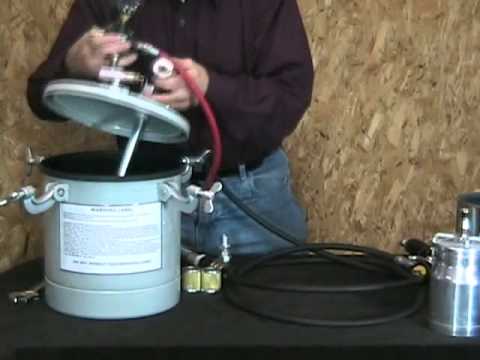
pressure pot

The best resin for casting beautifully crystal clear objects is PMMA (acrylic resin). That’s a polyester resin and those are notoriously stinky. Like, not only will you have a headache but so will everyone else in the building kind of stinky. Obviously these kinds of castings are done in purely industrial environments where you can have your workers in protective suits and a nice big, badass air filtration chamber to keep that stench locked down.

I have a workshop sandwiched between a tailor’s shop and a ceramics maker. Again, no dice. I have to pick something that’s not horrifically smelly. See what I mean when I say that 95% of my job is problem solving? Hehe, I wasn’t kidding.

But it’s not all doom and gloom guys! I’ve got stuff to show you.

IMG_2060[1]

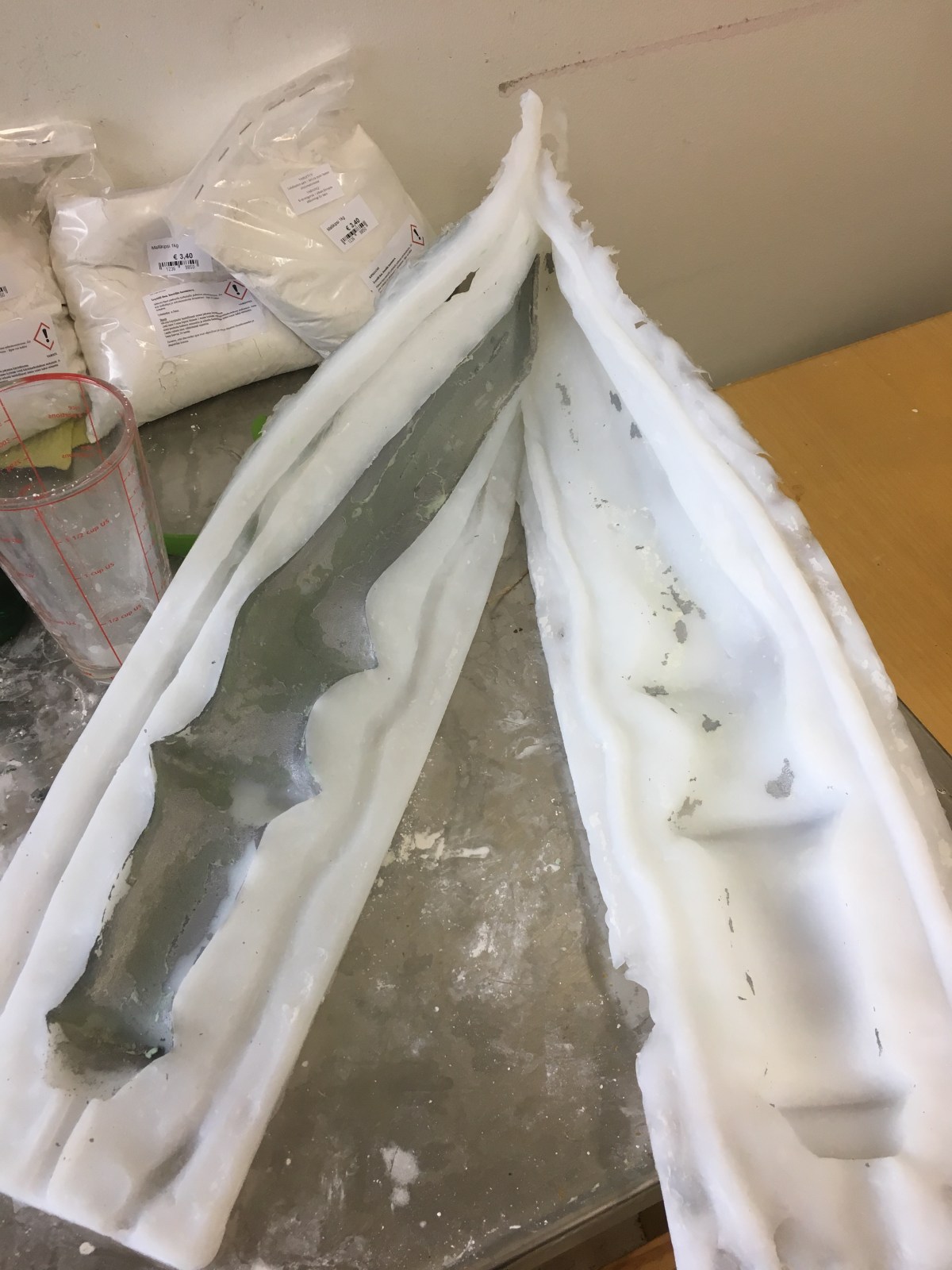
That is the inside of the silicone mould I made. It seems that the mould release agent I got didn’t work. On the right side, I used wax, and that worked rather well. On the left, I used a spray-on release agent and … uh, well it ripped almost all the paint and some of the foam off the prototype that I made. (That prototype is NOT in good shape right now and I really hope I don’t have to take yet another mould of it cause I dunno if it will survive!)

Now, as you can see, the bottom of the mould stuck together. That’s not a deal-breaker and I know why it happened. I should have used probably about a half tube or a full tube more silicone per side than the amount I used. Whoops! But I had no idea how much it would take so I had to guess. So the silicone mould is thinner than I would like it but on the upside, I now know the exact amount of silicone to use for making the final mould. That’s really valuable information because professional grade silicone is really expensive! I paid over 300 euros for just 10kg of it. Aren’t you glad I’m not making your swords out of silicone?! No one would be able to afford it!

IMG_2061[1]

Now here is the silicone mould clamped firmly in its plaster jacket. The rigid jacket is necessary to force the floppy silicone to hold its shape while I pour in the plaster. Yes, more plaster. Not resin just yet, because the prototype that I take the final mould of must be perfect. Any mistakes I make with that last prototype will be present in every single sword that comes out of that mould.

Now, there are some things that have me worried about this setup. 1. I forgot to put in an air vent so I’m going to have to pour super slowly. That means mixing the plaster in small batches and putting a lot of water in it.

What can go wrong? There is air in the mould. Of course there is! There’s air in the rest of the room too, haha! And when I start pouring in plaster, that air has to burp out somewhere or it will get trapped inside the mould. Annnnd that means the prototype sword that comes out will have holes in it where the bubbles were. Boo! We want holy swords not holey swords. (Okay that pun was awful, I’m sorry.)

2. I’m worried that the plaster might leak out of the mould all over the place. This mould is ugly, cheap, and very lumpy. It’s not nice and flat and easily clamp-able like it should be. And that’s okay. I only need it to work once. But it has to work at least once!

This is the principle of Rapid Prototyping. Use cheap materials and quick techniques to yield progressively better results until you’re satisfied with the final product. I’ll talk more about rapid prototyping later for all you enterprising prop-makers. 😉

3. I’m not really happy with the type of plaster I’m using right now. I’ve used a German brand (Knorr I think?) before and it took absolutely beautiful and accurately detailed moulds and I think that might be the kind I want to use for this. The kind I have (you can see it sitting in baggies in the picture of the silicone mould) is very thick unless you add double the amount of water it says on the package. It also cures really fast.

That’s great for things like making the hard jacket for the mould. I don’t need that to pick up fine details. I just need it to be done quickly and strong. So I’m not miffed that I bought a bunch of it form the hobby shop. I just don’t trust it to do what I need it to do for a prototype.

But the brand that I like is more expensive. (Story of my life.)

So what happens if this moulding doesn’t work? Well … the Iron Brother takes a deep breath and lets it out slowly (probably with a stream of his favourite cuss words) and starts the process over again. At that point, I have two choices. 1. I fix up the foam prototype and do the mould-making again from that without making the same mistakes that I made with this mould. (Too little silicone. Wrong mould release. Plaster jacket not straight and flush. Forgot an air vent for the bubbles.) or 2. I go with my original idea of crafting a perfect prototype first with a wooden core and polymer clay exterior polished to a high shine and coated in high-gloss varnish.

Which will I choose? That depends on exactly what kind of screw-ups happens with this casting! We’ll find out today folks. Are you excited? I’m terrified. Let’s go! Wheeeee!