10 Tips and Tricks for Creating Memorable Characters

 A friend of mine found this excellent article on developing good, fully-fleshed-out characters. 

Check it out!

Science fiction and fantasy are built on cool ideas and fascinating worlds — but those things are only as good as the people who live around and inside them. How do you create compelling fictional characters? It’s a huge challenge. But here are some tips that might make it easier.

There’s no silver bullet or easy formula for creating characters who live and breathe inside your head (and hopefully other people’s heads, too). If there were, we’d all be using it and it wouldn’t be such a nightmare. I struggle with this all the time — I’ll have a story reach an eighth or ninth draft before I realize that a major character is still basically a scrap of paper, carried along through the story on the wind. And after years of grappling with this issue, I’ve come up with some things can help me to imagine the character as a real, separate individual instead of a function of the plot or story.

Note: this essay is adapted from a mini-lecture I gave at Clarion West a couple weeks ago. Thanks to everyone there who asked questions and gave feedback on it. (And this is a good place to plug Clarion West, which is an amazing writing program that you should all support and apply to. I had such an incredible experience there, and felt privileged to hang out with the next generation of mind-blowing SF writers.) Continue reading “10 Tips and Tricks for Creating Memorable Characters”

Amazon wants to sell for less? Whoa!

Here’s an interesting article regarding the price of ebooks. Amazon is battling it out with Hachette for the right to price ebooks lower to reach a wider market. This could be big news guys. Finally, reasonably priced books for all!

A Message from the Amazon Books Team

A Message from the Amazon Books Team

Dear Readers,

Just ahead of World War II, there was a radical invention that shook the foundations of book publishing. It was the paperback book. This was a time when movie tickets cost 10 or 20 cents, and books cost $2.50. The new paperback cost 25 cents — it was ten times cheaper. Readers loved the paperback and millions of copies were sold in just the first year. Continue reading “Amazon wants to sell for less? Whoa!”

Createspace VS Lulu – Why I’m Switching

I have big news guys! I’m switching publishers for my novel, Blood of Midnight: The Broken Prophecy. Up until now, I’ve been with Lulu and as of now I will be changing over to Createspace.

There are several reasons for this and I want to present them here for you so that readers will know what they’re getting and anyone interested in self-publishing as I have will get a good idea as to which company’s services they might like to use.

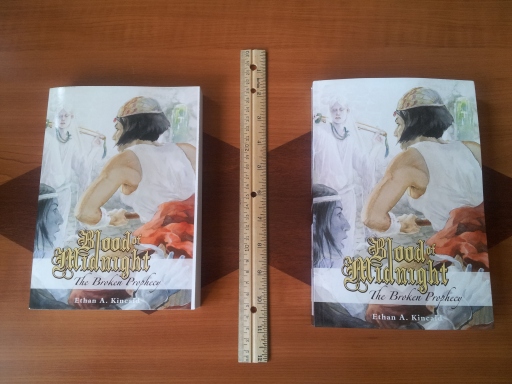
First, let’s talk about the quality of the product. Here is a side-by-side comparison.

2014-07-14 08.41.18

On the left is Lulu’s version of my book. On the right is Createspace’s. Continue reading “Createspace VS Lulu – Why I’m Switching”

How to Write Fight Scenes

How to Write Fight Scenes

A gripping, movie-worthy fight scene is a joy to read but sometimes difficult to write. If you run into trouble when it’s time for your characters to throw down, I have some pointers that may help you get into the proper headspace and articulate what’s going on.

First thing’s first: Location.

Where does the fight take place? Familiarize yourself with the area. Even if you don’t go into painstaking detail in the actual scene, you—the writer—need to know this place inside out, including the area surrounding it.

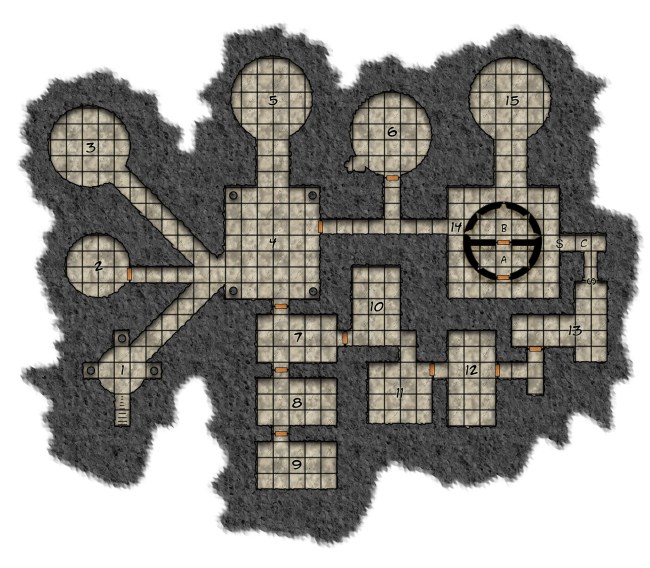
Get some graph paper and sketch the layout of the location as best you can. It doesn’t have to be perfect. Treat it like you’re trying to describe a rough blueprint of your apartment to someone who’s never been there before. What is this space usually used for? Where is everything? Think about the place from a tactical perspective. Are there any features or objects that someone could take cover behind/under/inside? Is there anything that can be used as an improvised weapon? Are there features that present hazards? (Subway tracks, flights of stairs, a cliff edge…)


Image

  Continue reading “How to Write Fight Scenes”

Scribd’s Improved Copyright Protection Systems Reaping Results for Smashwords Authors

Scribd’s Improved Copyright Protection Systems Reaping Results for Smashwords Authors.

Good news from Smashwords! Indie authors typically don’t make much money unless they’re lucky enough to go viral.  As such, it’s great to see companies protecting our modest profits and listening to our concerns.

I keep my prices as absolutely low as possible. Some people think this means I undervalue my work. I don’t. I aim to make my book accessible to people of limited income because I remember the not-so-great feeling of browsing Chapters as a broke student writing down the titles of all the books I wanted to buy when I had the money. That’s like going to Disneyland just to sit outside the gates and look longingly at all the things you can’t enjoy.

I don’t believe in doing douchebaggy things like using DRM protection which only serves to annoy paying customers. So, it’s nice to see Scribd doing this and allowing we indie authors to keep our prices reasonable without worrying so much about pirates cutting into our pay. Way to go guys!

The Great eBook Royalty War

The Great eBook Royalty War

This is a fascinating article  a friend of mine linked to me this morning. Too good not to share and it exemplifies the reasons why I chose to self-publish rather than go the way of traditional publishing. The control over my own work and my royalties is worth it.

You can't buy that! The great e-book royalty war

Michael Chabon (Credit: AP/Seth Wenig)

A recent lawsuit brought before the U.S. District Court in New York offers readers a glimpse into a battle raging behind the scenes in traditional publishing. The dispute, between authors and publishers, has been going on for several years and there are times it affects which titles you’re able to get as e-books.


Much of the e-book market is for new titles, but by no means all. The first e-books I wanted to load onto my new tablet were classics I hoped to reread but found too bulky to lug around in print form and old favorites I wanted to revisit. When a friend fervently recommends a book published 40 years ago or so, I, like a lot of people, instantly pull out my phone or iPad and see if a digital copy’s available. That way, the next time I’m stuck waiting for a plane or just in the mood to read something that’s not for work, I have a nice little stash at my fingertips, everything from W.G. Sebald’s “The Emigrants” to “I Capture the Castle” by Dodie Smith. In the publishing business, books like these are referred to as backlist, and they are the quiet economic fuel that powers the industry.

However, if I wanted to reread the 1973 YA classic “Julie of the Wolves” on my iPad and I was shopping before 2011, I would have been out of luck. The author of that novel (about an Eskimo girl who runs away from home to live with a pack of wolves), Jean Craighead George, could not come to terms with HarperCollins, the longtime publisher of “Julie.” Like most large, traditional publishers, HarperCollins insisted that George accept a 25 percent royalty on digital sales of her book, a cut George considered too small. Instead, George opted for Open Road Integrated Media, a company founded with the express purpose of bringing backlist titles to the e-book marketplace. Open Road offered George a deal in which she received half of the proceeds from the sale of “Julie of the Wolves.”

HarperCollins then sued, claiming it retained the right to publish “Julie” as an e-book, and — because of the wording of George’s 1970s contract — they won. But the results (and the rather complex finer points) of that particular case are less important that the essence of George’s choice: 25 or 50 percent. At one time, several publishers allowed 50 percent royalties on e-book sales, but today, the five biggest book publishers are holding the line at 25 percent.


Authors and their agents are fighting tooth and claw to move back that line. Their argument, as expressed by Susan Golomb, agent for such writers as Jonathan Franzen and William Vollmann, is that, with an e-book, “all the hard costs of publishing have evaporated. No printing, binding, warehousing, shipping. They have no costs.” Many authors are willing to hold out on agreeing to the publication of e-books until publishers’ terms improve.

Publishers counter that, while much of the cost of producing a book is loaded onto the hardcover edition, they do also need sufficient income from e-book sales to pay for the editors, designers, publicists and other marketing staff members (as well as overhead) required to bring a title to market, no matter the format. If the e-book edition subtracts from the potential sales of the new hardcover, then the e-book must help make up the difference.

Even if that’s true, however, it’s unlikely that HarperCollins is still paying off the cost of editing and promoting “Julie of the Wolves,” a title that has sold 4 million copies in print since it was first published 41 years ago. It’s also unlikely that they’d be doing much to promote the e-book if they did publish it, since publishers tend to concentrate those resources on new titles. “Publishing” George’s novel as an e-book would amount to the relatively cheap task of digitizing the text, then distributing it to the handful of major e-book retailers: Amazon, Apple’s iBookstore, Kobo, etc. A smaller company like Open Road can do that as effectively as a behemoth like HarperCollins. Furthermore, Open Road promises to promote the backlist titles it publishes as e-books.

George is far from the only author to find this arrangement more appealing than the one offered by her print publisher. In 2011, Michael Chabon published e-book editions of his earlier books with Open Road, and the mountaineer Joe Simpson, author of the bestselling survival memoir “Touching the Void,” set up his own e-book publishing company in Britain rather than accept the 25 percent royalty offered by his print publisher, Random House. (He characterized Random House’s negotiating stance as “bullying.”) Perhaps the most bare-knuckled the fight over this issue raged was back in 2010, when superagent Andrew “The Jackal” Wylie preemptively assumed the right to publish e-book editions of such backlist classics as “Lolita,” whereupon Random House refused to do any further business with the Wylie Agency and the Jackal backed down.

While literary agents tend to be vocal on this topic, the publishers I contacted, with the exception of Dennis Loy Johnson, publisher of Melville House Books, were unwilling to speak on the record. As a small press, Melville House pays even smaller e-book royalties than the majors: 20 percent. However, Johnson says that e-books constitute such a tiny part of the company’s sales that this has not been a great bone of contention. “Showrooming is real,” Johnson said, referring to book buyers’ habit of browsing in physical bookstores to find out about interesting new titles, then going online to purchase an e-book at a lower price. “In a way, the print book is an advertisement for the e-book and the e-book royalties subsidize the expense of getting those print books out to the stores where people can discover it.”

“Although I am obviously rooting for publishers during this time of massive industry change due to evolving technology and other influences,” said Mary Evans, Chabon’s literary agent, “to have the author bear such a large part of the financial shift seems ill-conceived … Options such as Open Road which publish their books very thoughtfully and intelligently and pay the 50 percent net which most publishers started with … if that is a legal option it is a win-win situation for any author, certainly including Michael Chabon, who has benefited by having some of his backlist published by Open Road.”

Publishers also argue that the money they make on backlist titles like “Julie of the Wolves” funds the risks they take in publishing new authors. They see it as a model a bit like that of a health insurance company, where the contributions of people who use fewer services even out the costs of the people who use more. Book publishing is a gamble; no one knows beforehand which books will become hits, and most books end up losing money, yet you can’t succeed at all if you aren’t constantly publishing new books. The relatively small percentage of profitable titles make up for the many that never earn back the authors’ advances. You can see why this idea might seem unpalatable to the rare successful author. But who knew that book publishing is the last redoubt of that old Marxist principle of “from each according to his ability, to each according to his needs”?

Further reading

Andrew Albanese for Publishers Weekly on the federal judge’s ruling for HarperCollins’ right to publish Jean Craighead George’s “Julie of the Wolves”

Hillel Italie for the Associated Press on Michael Chabon’s decision to publish backlist titles with Open Road Integrated Media

The Guardian on Joe Simpson’s decision to form a company to publish the e-book editions of his (and other authors’) books

 

Continue reading “The Great eBook Royalty War”

How to Self Publish a Novel in Canada

I was recently asked the process one must go through to self-publish a novel as I did. Okay. Let me see if I can make an explanation as easy as possible. I shall be completely straightforward and honest so brace yourself! It’s better than getting nasty surprises later.

1. Get an ITIN. You’re going to need that in order to claim the Canadian-US tax treaty and stop them from withholding 30% of your profits every time you make a sale across the boarder. Do this FIRST because it takes a full year for it to kick in once it’s processed. Do not baulk at the fee. This is a business. If you invest nothing, you’ll get exactly that in return.
2. Get an ISBN. If you’re selling your book in more than one format, request more than one ISBN. I requested 3 because I’m selling my book as an .epub and .mobi (two different ebook formats, the latter being exclusive to Amazon), and as a paperback.

Continue reading “How to Self Publish a Novel in Canada”

Disposable Boys

Yet another article I’ve sat on for awhile, drawing up the courage to actually post it. I’ve been ridiculed and bullied into silence on this matter in the past but my feelings on it haven’t changed. Nobody is disposable. Nobody deserves to be exploited or abused. Nobody.

Trigger Warning: sexual abuse, human trafficking, exploitation

The Disposability of Boys

How We Talk About Rape

I stumbled on this essay: We Need to Change How We Talk About Rape by Film Crit Hulk while doing some research for a future novel. I hesitated in posting it up because of its obviously delicate subject matter but, after some thought, I decided it was too good not to share.

This is a 12 part essay, so I found it best to be consumed in parts over a few days, especially because I like to take the time to think on heavy subjects.

For those of you who don’t know me, I am extremely picky about what feminist literature I read because a depressing amount of it contains: have penis = bad person. (To grossly oversimplify.) While I don’t agree with the essay 100% — I rarely do on any subject matter — it was a refreshing and enlightening experience to be able to read on the subject without being made to feel like an asshole simply by virtue of being a man.

Well, back to work with me. Books don’t write themselves.

Get A Job

One of my favourite writers recently wrote a blog post on one (if not the) most irritating thing about being a full time author.

Check it out here: Get a Job

As for me, I’ve hit the halfway mark for blocking out the scenes of book 2 of Blood of Midnight. Busy busy!

Lastly, remember that there are only three weeks left to take advantage of:

Image

At the end of February, it’s back to full price, so don’t miss it!